Avidyā and White Ignorance
Reading about Buddhism and Whiteness
Thanks to everyone reading here. After a little break for the change of semesters known as ‘the holidays,’ I’m back with updates from what I’ve been reading.
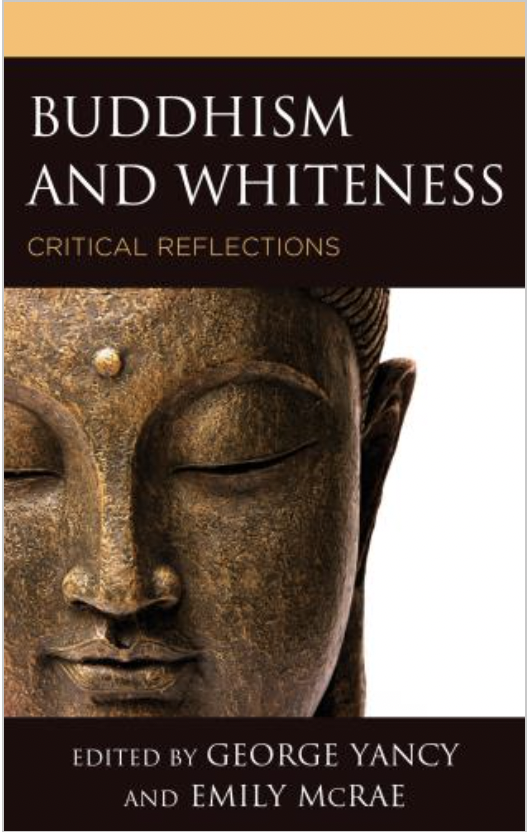
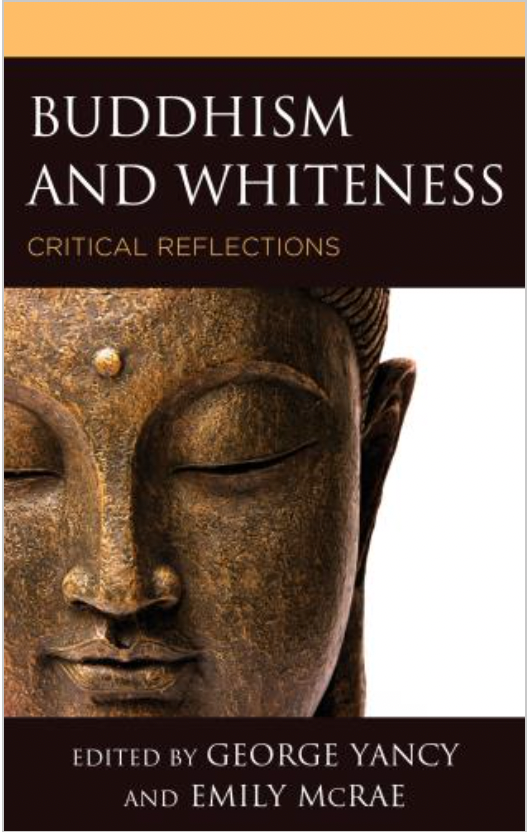
The Sanskrit word avidyā means is ignorance, misconceptions, misunderstandings, incorrect knowledge. I’ve just finished reading a book, Buddhism and Whiteness: Critical Reflections, an edited volume with a dozen or so contributors. There’s a chapter by Emily McRae (also a co-editor, along with George Yancy) on avidyā and white ignorance that I’m still thinking about.
McRae and the other contributors in this volume are drawing on the tradition of philosopher Charles Mills and his notion of the “epistemology of ignorance.” That is, the idea that we, who are raised white, are so impaired by that upbringing that we “cannot understand the world we ourselves have built.” These writers, and particularly McRae, are joining this tradition to the spiritual insights of Buddhism.
I’m not Buddhist and can only read as an outsider to that set of beliefs and practices, but there are things here that resonate, like avidyā which McRae likens more to a delusion. She writes:
“Knowledge, on its own, is not sufficient for liberation from suffering in the Buddhist view… clearly, knowledge by itself does not always liberate us from suffering, a fact that David Burton has referred to as a ‘conundrum’ of Buddhist philosophy. Delusion cannot be eliminated just by exposure to, or even acceptance of, the facts. … To uproot this or any other delusion, knowledge needs to be integrated in the right ways, remembered as applied at the right times, and perhaps most importantly, must be supported by and harmonize with emotions, desires and perception.
Here, she is writing specifically about white ignorance — the way that we, who are raised-white refuse to see what is plainly true about racial injustice — and I think she is on to something here. It is not simply knowledge that we need, but we have to do the deeper work of uprooting our delusions. Our delusions and indeed all suffering, according to Buddhism, are rooted in our cravings and our aversions.
McRae suggests that what we need to do is cultivate equanimity to counter our delusions, as she explains:
“White delusion is a deep failure of whites to reason well or even think clearly about issues involving race … this failure is a refusal to engage, which itself is due to an emotional immaturity that is characteristic of whiteness. …The person with equanimity, however, has the ability to act in better ways, to not simply react on the basis of her deluded aversion narratives. …In Buddhist ethics, one trains in equanimity: it is too important as a moral skill to be left up to chance or natural tendencies.”
These practices can include meditation and other spiritual practices. The focus of such training, McRae writes, is in overcoming ‘us’ vs. ‘them’ thinking. This seems like a simple enough exercise, until she says that we have to deconstruct that it means to be a ‘friend’ vs. ‘enemy.’ We must, she says, “try to consciously consider how ‘friends’ may harm us and ‘enemies’ may help us.”
“In general, developing equanimity in the context of whiteness is difficult because it requires us to face our racist cravings and aversions, to recognize them for what they are and not react on the basis of them. In this way, equanimity, perhaps especially in the context of whiteness, is more about not-doing than doing; it is about learning how to refrain from reactive urges by getting some perspective on my cravings and aversions.
Here, McRae really gets at something I’ve been struggling to articulate. That is, the thing that many white people need to learn is to do less, to refrain, to not be reactive. There is a kernel of truth in here about white supremacy and what it does to those of us who are raised to be its inheritors: it tells us that we need to LEAN IN, we have the ANSWERS, and we are the best ones to be in CHARGE. In fact, doing less is often doing the right thing.
“This means that white people who cultivate equanimity as an antidote to white delusion will have to tackle their own racism by recognizing it and coming to understand its scope and force in one’s own moral psychology without immediately trying to ‘fix’ it since this urge to fix our racism (or, hide from it) is itself another craving to be observed rather than immediately acted upon. … White craving for moral purity should itself be held at a distance.”
Ah, yes. Our craving for moral purity. This is why it is so difficult to talk to my fellow raised-white humans about the harm we do holding on to the ideas of our superiority. It’s because we crave being validated in our putative moral purity. What if we could let go of that? How different the world might look then, if we were just humans, out here laughing and crying and dancing with everyone else.
The way out of this suffering is, according to McRae’s reading of Buddhism, equanimity. Learning to quell the aversions — “is that neighborhood safe?” — and the cravings — “I just want the best for my children” that are rooted in whiteness.
“Equanimity, then, has the potential for increasing self-knowledge for white people — understanding our own whiteness — since it is what allows one to remain in the space of the discomfort of recognizing one’s own racism.”
I think McRae is on to something here. Developing a practice of equanimity is one way that we can undo the harm of whiteness. We can train ourselves out of our delusions, out of our aversions and cravings, and into greater self-knowledge.
And yet, no matter how well-lit the paths out of avidyā are for us, the hold white ignorance has on us is tenacious. For me, this book is a reminder that we are not stuck here, we can find a way out if we only look for it and practice another way.