Constructive Reparations
Reading Olúfẹ́mi O. Táíwò
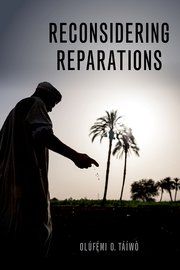
I needed a palette cleanser after reading about royals, so turned to a couple of books I’ve been meaning to read by philosopher Olúfẹ́mi O. Táíwò, Reconsidering Reparations (Oxford UP, 2022) and Elite Capture (Haymarket Books, 2022). Both books are making a similar, related argument about what Táíwò calls “constructive reparations.”
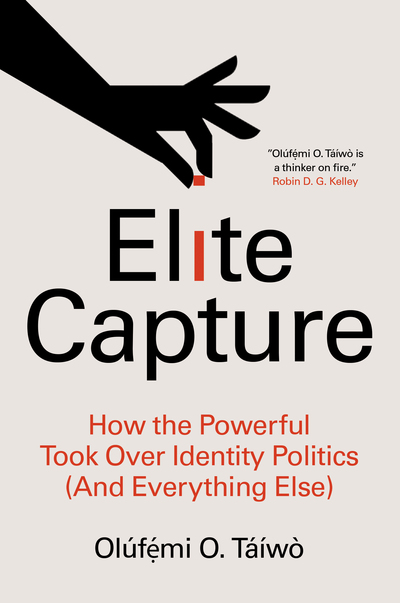
I discovered Táíwò’s writing through a marvelous podcast, Scene on Radio, an episode called “Change Everything” (S5, E11). Part of what I appreciate so about his approach is that “constructive politics,” connects the fight against white supremacy with the call for reparations and climate justice.
Here he explains the approach in Elite Capture:
“A constructive politics pursues specific goals or end results, rather than aiming to avoid ‘complicity’ in injustices that we assume will mostly persist anyway. …In general, a constructive politics is one that engages directly in the task of redistributing social resources and power rather than pursuing intermediary goals cashed out in symbols. …This is a demanding approach. It asks that we aim upstream, that we be accountable and responsive to people who aren’t yet in the room, and that we build the kinds of rooms in which we can sit together, rather than merely seek to navigate more gracefully the rooms history has built for us.”
In this call for constructive politics, I see an alignment with calls to defund the police and rewild suburban lawns and fund public schools through solar power rather than the inherently unequal property taxes.
Táíwò takes his lessons from the global fight against colonialism and he connects our present struggles to those. I appreciate this as a reframe for the work I’m doing now on the far right. I’ve been struggling to find anyone who can set the current global rise of the far right in the past twenty years in a useful framework for understanding it on that scale. I’m grateful to Táíwò for the following in Reconsidering Reparations:
“This scale can seem daunting and impossible. How are we supposed to win a political movement of that magnitude? But what I’ve attempted to argue throughout this book is that, for the past five hundred years, the task of justice has always been this large. The colonizers and conquerors of the world, from the US southern planter aristocracy to the Third Reich, have never been confused about their scale of their ambitions for justice. It’s time they met their match.”
YES. This puts into words something I’ve been trying to say. Whether colonizers, or the Third Reich, or the contemporary white supremacist movement, these interest groups see their agenda as a global one.
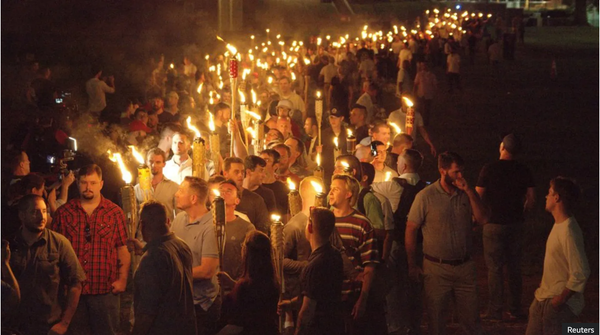
As just one example of this, here’s Derek Black, son of Don Black, telling a reporter from the New York Times what it was like growing up in a household with a father who ran Stormfront, the longest-running white supremacist portal:
… we had the latest computers, first people in the neighborhood to have broadband because we had to keep Stormfront running, and so technology and connecting people on the website, long before social media and the way the web is set up now was his driving purpose, so we were very connected to everybody in the white nationalist movement to everyone in the world. When I was a little kid, I would get on chat rooms in the evening … and I had friends in Australia who I would talk to at a certain hour ... I had friends in Serbia I would talk to at a certain hour.
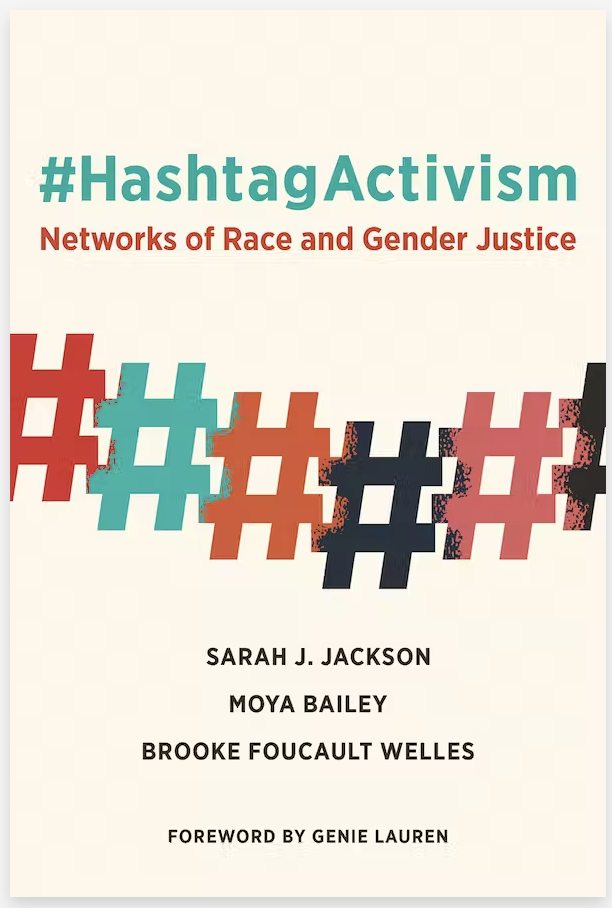
The global connections the Internet has created has made many movements of real liberation possible, as Jackson, Bailey and Welles make plain in their book Hashtag Activism.
At the same time, those who are committed to the goals of white supremacy have seen this global network as an innovation that gives them an opportunity to spread their agenda. This is part of an old playbook that I describe here, and part of why I’ve called white supremacists “innovation opportunists.”
The question I’m still wrestling with is: how do we create a “constructive politics” to combat the far right? What does it look like to build the world we want in a way that prevents the rise of the far right? For these questions, I agree with Táíwò: “It’s time they met their match.”