Cultish
The Spiritual Emptiness at the Heart of Whiteness
I had two conversations recently that were both about the disconnect between those doing work on the far right (aka, “hate” and “extremism”) and those doing anti-racism work.
I spoke with Shelly Tolchuk, an LA-based writer, teacher and trainer who does anti-racism work. We met at a conference I attended recently, and then connected via email and zoom afterward. Shelly’s new book (with Christine Saxman), Being White Today: A Roadmap for a Positive Antiracist Life, comes out next month June 14, 2023. I’ve pre-ordered it and am looking forward to learning more from her on this.
Later the same day, I had a lovely dinner out with my friend Maria Stephan, who is an author and organizer that I met through the work at SURJ-NYC. and among the many things we talked was this gap between far-right researchers and anti-racism advocates.
Surprisingly, it’s an enormous, Grand Canyon-sized, gap.
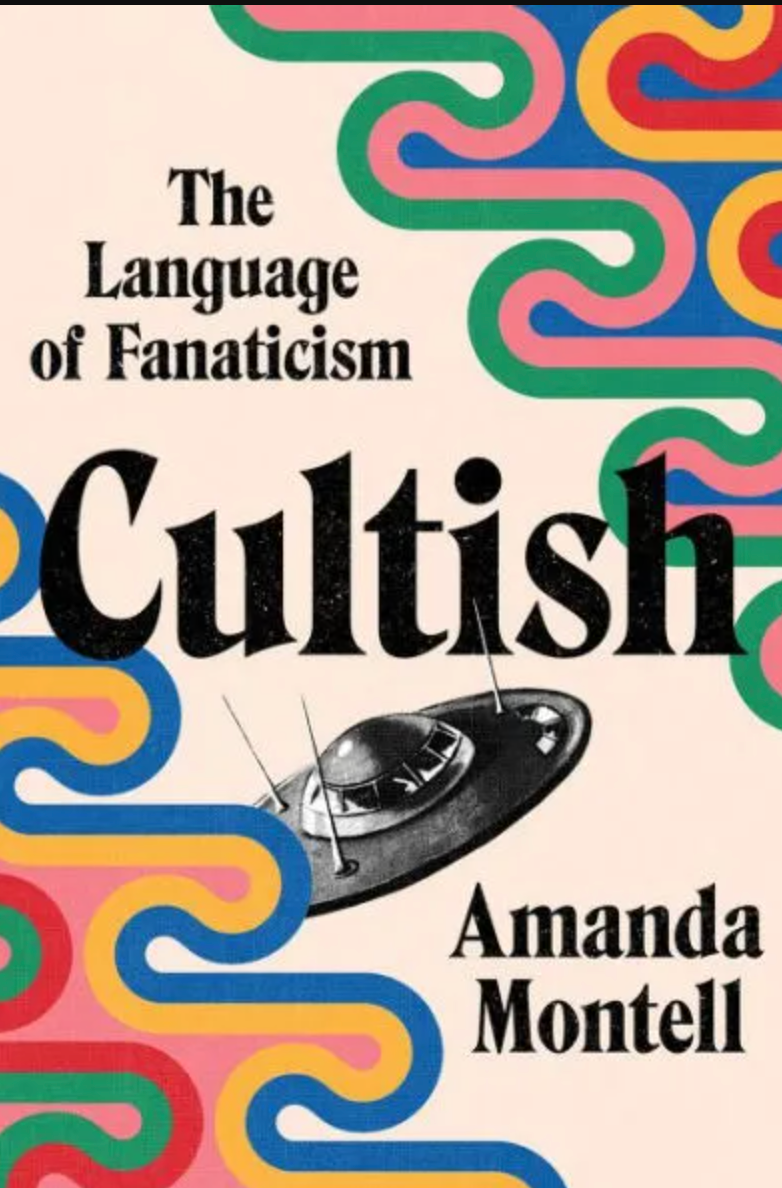
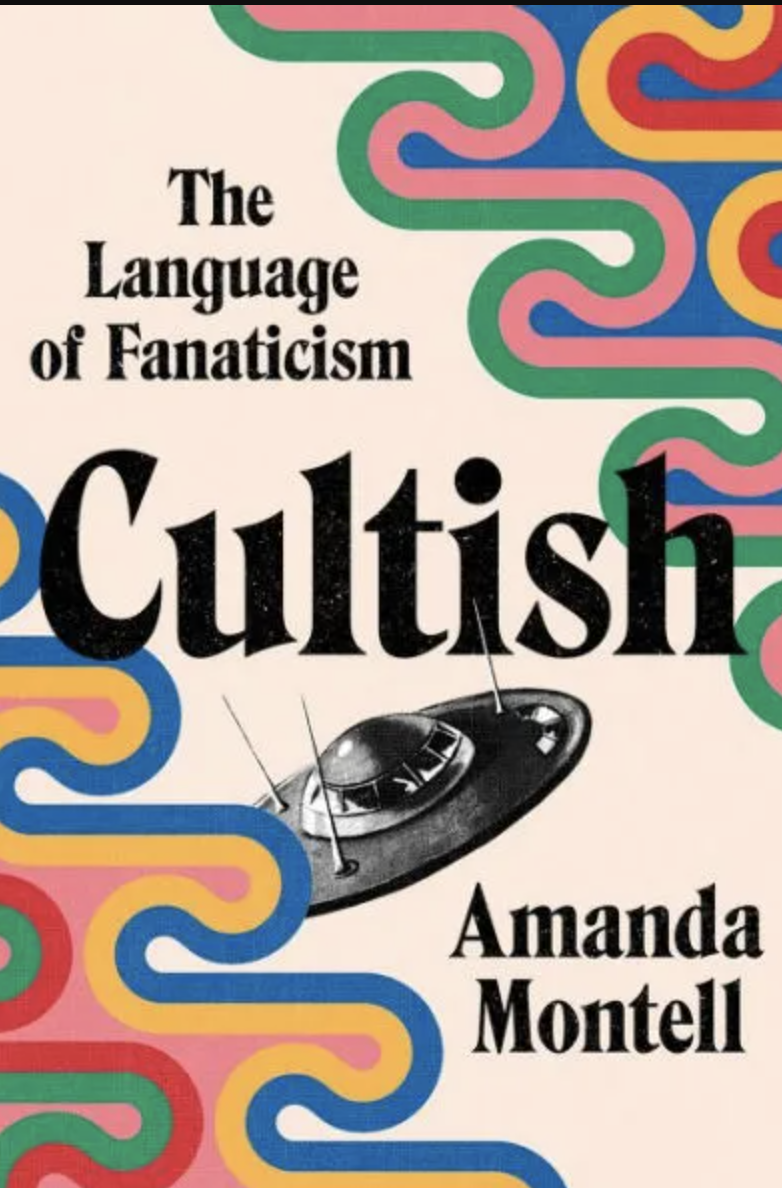
I’m still working out why this gap exists and how to address it but among the things that I keep coming back to is the spiritual emptiness at the heart of whiteness. It leads us, who are raised-white, down some pretty weird paths in the search for connection, meaning and purpose. Maria suggested this book, Cultish, which I’m about half way through, and it (unintentionally) makes my point: our collective susceptibility to cults is about the spiritual emptiness of whiteness.
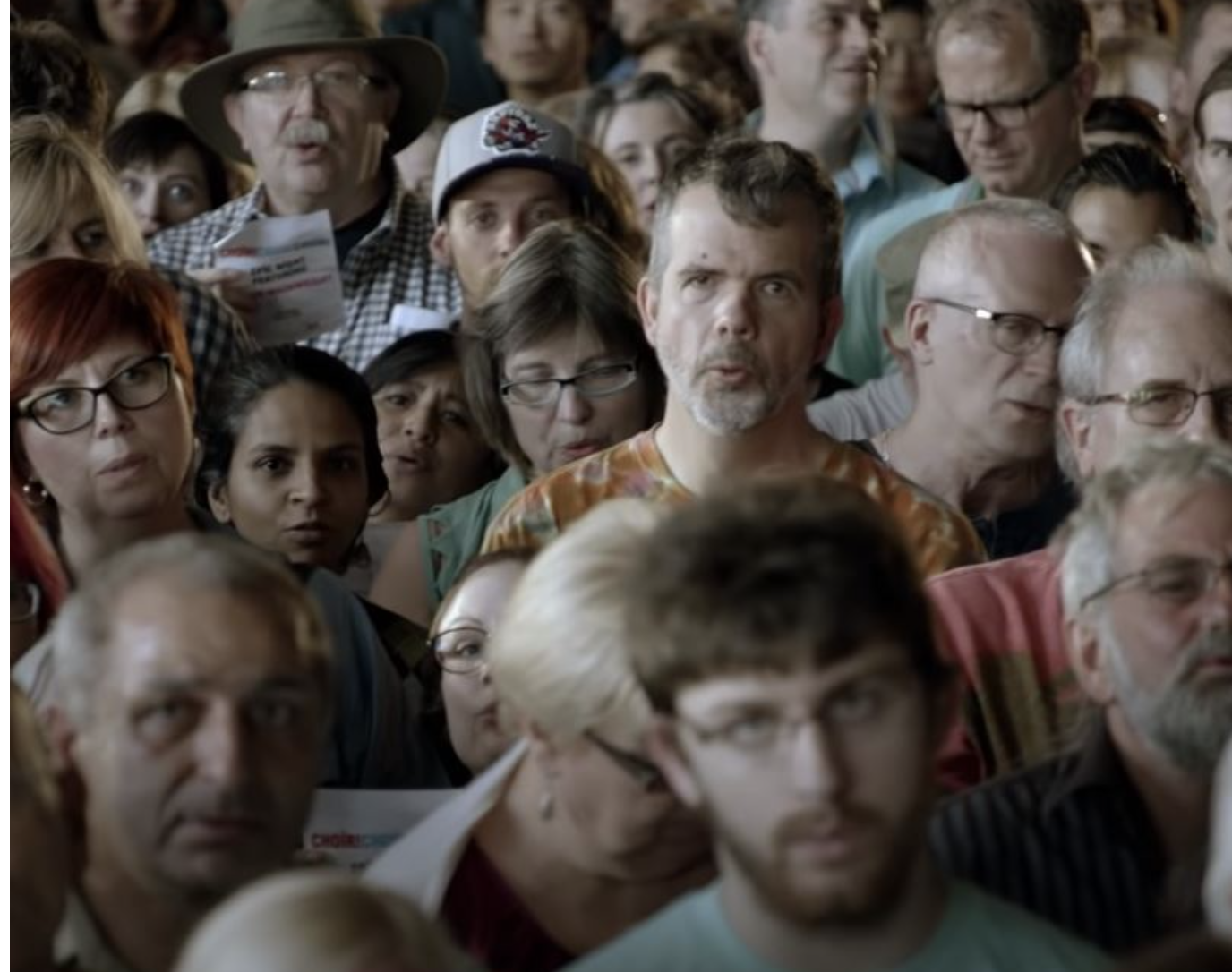
Evidence of this is all around, once you learn to see it. For example, in the 2021 documentary film, “Hallelujah: Leonard Cohen, A Journey, A Song,” the films ends with a sequence that’s meant to be a transcendent moment in which large crowds gather to sing Cohen’s iconic tune. When I saw it, I just thought: Huh, this is like church for secular, white-raised folks. The question, though, is: why do we need this? Could it be that the whiteness we’ve bought into is actually a spiritual dead end?
Evidence of this is all around. Montell clocks some of this in Cultish: from Soul Cycle to CrossFit to Kundalini yoga, people are looking for connection and then fall into cultish groups. Her explanation is that all of these (and more) rely on specific linguistic strategies to convince people of their specialness and the inherent superiority of their chosen path. A linguist, Martell charts the way the word cult takes on different meanings, including the way “cult status,” has become a sought-after marketing claim, often used in cosmetics branding. What Montell misses, though, is any mention of whiteness in the pull toward the belongingness offered by cults (or, the way far right groups might be cults). Of course, no one ever thinks they’re in a cult, even when they are.
There’s lots more of evidence of how whiteness makes us vulnerable to cults beyond the world of fitness, many of these examples available on a streaming service near you.
For instance, in “The Vow,” and “Seduced,” are two different multi-part docuseries about the same midnight-volleyball-cult based in Albany, New York, known as NXVIM. This is the one where a shaggy-haired MLM-guy connected with a former nurse to create an “Executive Success” group, which was underwritten by a Seagram’s heiress, and that turned out to be an elaborate cover for a sex-trafficking operation organized for the MLM-guy’s gratification.
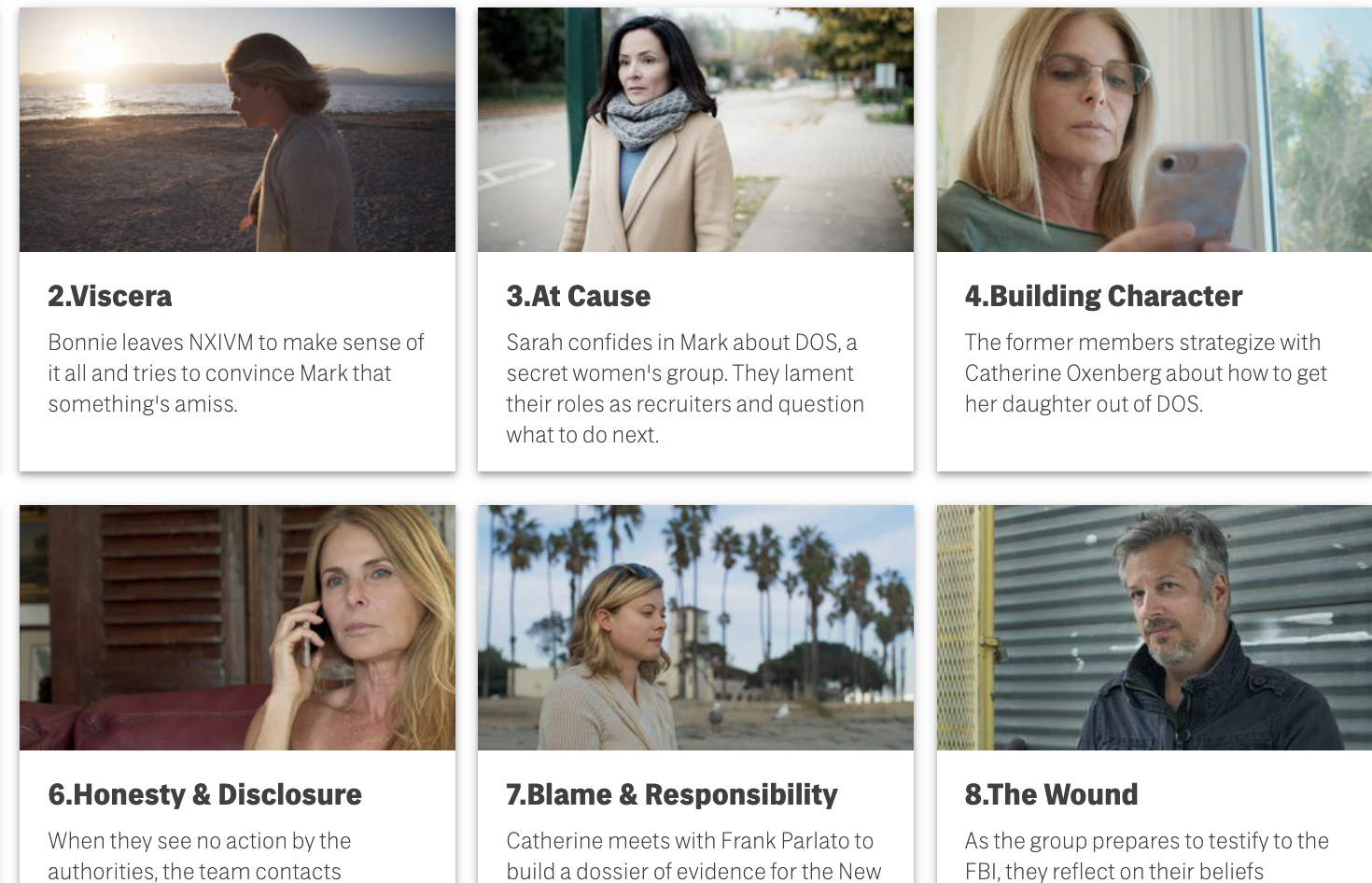
Like the people gathering to sing “Hallelujah,” much of the footage from the days of NXVIM shows mostly white, liberal people gathering in quasi-religious meetings (complete with color-coded sashes that look a lot like priestly stoles.) Again: why do these secular, white liberals feel the need to invent this? Perhaps, it is the spiritual emptiness at the core of whiteness.
When I say this is a story about whiteness, it’s not simply that this story includes (mostly) white people, nor is that white people are centered in this story. It’s that this story is told as a “human” story about “average” people who are not racialized in the telling of the story. In other words, none of the central players in this drama are portrayed as “having race,” or being concerned about race (theirs or anyone else’s). They were simply “normal” until they encountered this cult. The dramatic tension is in this formula: how could “normal” people fall for this cult? Normal here, means white, liberal, affluent, attractive, well-groomed.
Let’s take another example, from a slightly different place on the political spectrum. In “The Anarchists,” a 2022 docuseries, the filmmakers follow the antics of a Canadian crypto-entrepreneur-and-provocateur, who launches a conference in Acapulco, Mexico in 2015 called “Anarchapulco.” The series follows the annual event over a number of years as it seeks to draw anarchists to the beauty of Acapulco. Central to this group’s definition of anarchy is a core conviction that taxation is unjust and central banking is evil (The “evil” of central banking is coded as “Jewish,” and this is part of why David Golumbia argues that bitcoin and all crypto-currencies are really right-wing ideology masquerading as software. He is not wrong.)
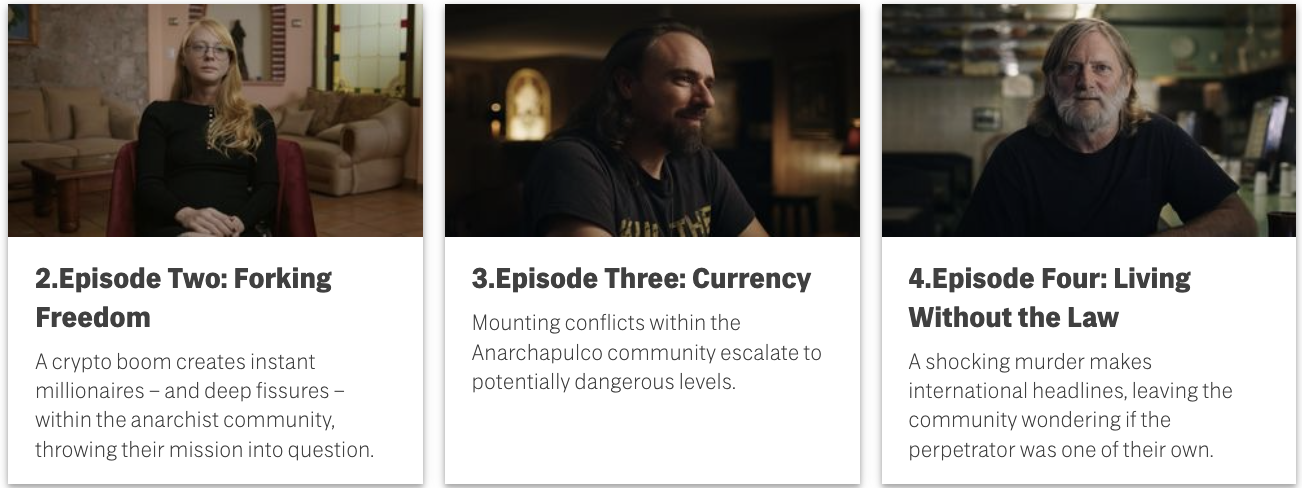
According to the folks at Anarcapulco, those who buy into the global paradigm of “statism” are sheeple, and not the free-thinking individuals these anarchists imagine themselves to be. And this is where whiteness comes into this story. The (mostly) white protagonists here, and the gaze offered by the filmmaker, is one that centers these people as existing outside of race, as “normal,” until their encounter with this cult. My point is not just about the representation of whiteness, but the spiritual emptiness that draws people to this kind of project (both the cult and the filmmaking about it).
Both “The Vow” and “The Anarchists,” feature a lone Black woman who has been caught up in each of these respective cults. I’m sure that the filmmakers intended these interviews to give a patina of inclusiveness and multicultural diversity to their stories, but the appearance of a single Black woman in each series sets the overwhelming whiteness of the cult in sharp relief. To the eye untrained at noticing whiteness, it could deceive one into only seeing “individuals” but this is a kind of misdirection that obfuscates.
More examples from other points along the political spectrum include the cult of white Christian nationalism and the cult of Trump. But these are easier for those of us on the left-side of the political spectrum to spot. It’s when it comes to us, in the form of a group sing-a-long to “Hallelujah,” or midnight volleyball in Albany, or talking about crypto in Acapulco, that suddenly we’re less able to see what’s happening, to recognize that our own spiritual bankruptcy rooted in our investment in whiteness is leading us down these misbegotten paths. We’ve got to get better at recognizing whiteness, the way it operates, and what it steals from us. I’ll close with this quote from Richard Dyer, a British scholar and smart guy who has been writing about whiteness for a minute:
“This then is why it is important to come to see whiteness. For those in power in the West, as long as whiteness is felt to be the human condition, then it alone both defines normality and inhabits it. …the equation of being white with being human secures a position of power. White people have power and believe that they think, feel and act like and for all people; white people, unable to see their particularlity, cannot take account of other people’s…White power nonetheless reproduces itself regardless of intention, power differences and goodwill, and overwhelmingly because it is not seen as whiteness but as normal. White people need to learn to see themselves as white, to see their particularlity. In other words, whiteness needs to be made strange.”
I think this is what’s underneath that disconnect between those studying the far right and those working on antiracism: we have not yet learned to see ourselves as white, and to make whiteness as strange and particular as it is.