Imagining a Better Future
On Zohran Mamdani and a new politics of solidarity
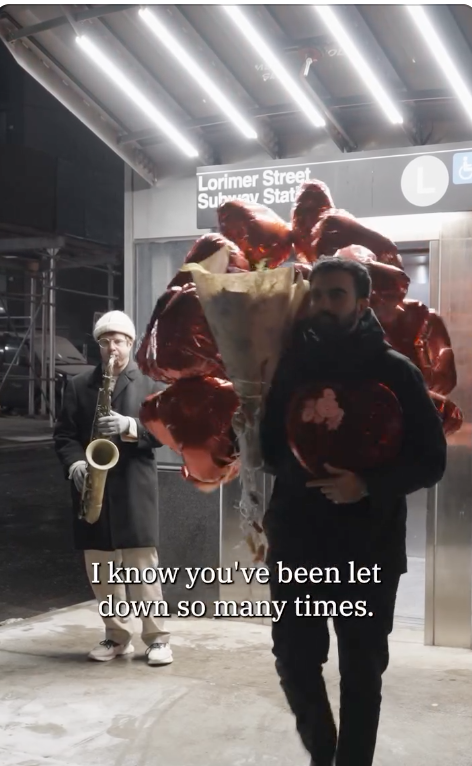
Back in February, I mentioned Zohran Mamdani’s charming, balloon-carrying campaign for New York City mayor as a tiny glimmer of hope in the grim reality of the political landscape. Here’s what I said:
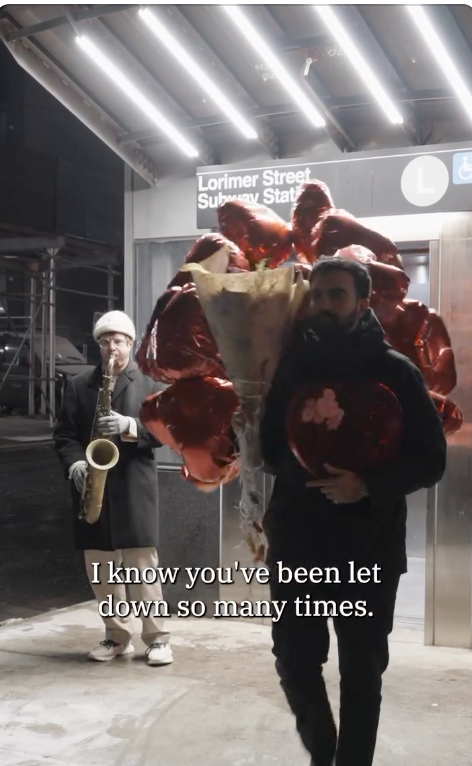
IMAGINING otherwise + Acting Locally. One of the main things that white supremacist capitalist patriarchy steals from us is our imaginations. It’s one of the reasons I ended the seminar I taught last semester with this inspiring book, Imagination: A Manifesto, in which Ruha Benjamin challenges us to conceive of a world where everyone has food, shelter and love. What’s your first response to that idea? If it’s to scoff, or dismiss it as naive, then you have work to do on your imagination, and this book is a great place to start. Here in New York City, there’s a guy running for mayor, Zohran Mamdani, and he’s walking around with a bunch of balloons, trying to get people to imagine otherwise.
Just below a still image from one of many social media videos by the campaign, this one is with the balloons from February and is framed as a romantic, Valentine’s Day invitation to voters. It is also adorable, fun and hopeful in a way that melts cynicism. Watch the entire video here over on Threads (and my apologies for this screengrab). Now, a mere four months later that has felt like four years, we here in New York are celebrating Mamdani’s win in the Democratic Primary for Mayor.
So much about this campaign has been remarkable to behold: the platform on affordability for working-class New Yorkers, the messaging discipline, an incredible ground game that mobilized hundreds of people to knock on a million doors and have conversations with people about the election, and a tangible politics of solidarity.
There is much to say about all those, but the thing I’m struck by at this moment is the way Zohran Mamdani and Brad Lander, another candidate for mayor, worked together to subvert a particular kind of racism that was at play in this contest. That form of racism is equal parts Islamophobia and Zionism. What the billionaires and fear mongers kept peddling was that Mamdani, a 33 year old, Muslim, socialist would be the end of life in NYC and that we would all be living under sharia law, or some bullshit like that.
Brad Lander, a 55 year old Jewish New Yorker, who ran alongside Mamdani, in a way that seemed more like they were friendly colleagues rather than a political rivals. This was possible because of the structure of voting here, which is something called “ranked choice voting” (RCV). This way of casting ballots is a method that undermines the winner-take-all approach of traditional, majoritarian voting. And, it makes it possible to “cross-endorse” other candidates on the same ballot, which both Mamdani and Lander did.
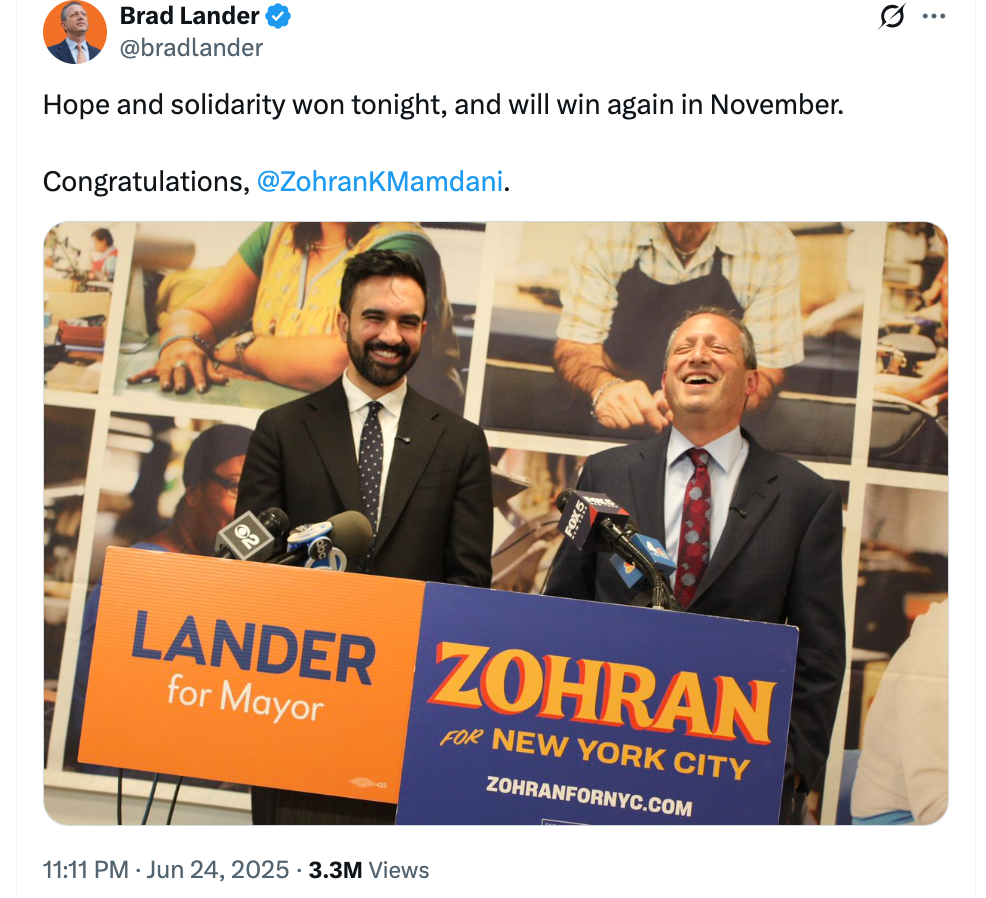
Lander also worked to deflect some of the most egregious attacks on Mamdani, such as the one on Stephen Colbert’s show the night before the primary. In a series of questions that sounded like they were from the hasbara handbook, Colbert grilled Mamdani about whether Jewish people should be afraid of him and whether the state of Israel has a right to exist. I have to admit, I didn’t love all of Mamdani’s answers (especially “the war crimes of Oct.7”) but he was calm, sincere, and direct in offering reassuring answers. And, he didn’t back down on the rights of Palestinians. Brad Lander then stepped in offer his presence as a Jewish New Yorker to say with his embodied self, there’s nothing to fear from Mamdani. It was a powerful moment of solidarity made possible by all the heroic pro-Palestinian activism in the last eighteen months. Even though Lander came in third (after Cuomo) in the ranked choice voting, he did this city a real service through this act of political solidarity. I’m hopeful that this solidarity is a harbinger of a better future for us all.
Back in April, I had the great good fortune to sit at a table with Patricia Hill Collins and several other fabulous, smart, Black women following an event. As we were discussing the current, awful state of the world and how we might effectively intervene, Pat posed a question to the table: “Do you consider yourself patriotic?”
All of us, as I recall, said no. When we did, Pat suggested that we were missing an opportunity to cultivate solidarity.
Since then, I’ve been sitting with that question, and wondering about it. When I left Texas and moved to Cincinnati, Ohio to do a post-doctoral fellowship with Pat back in 1993, I felt like I had moved to America. I had never seen so many U.S. flags, and so large. I wondered if growing up in Texas, and having an older, hippie brother, made me averse to patriotism.
What this election has taught me is that my patriotism, to the extent that I have any, is to New York City. This city with people from all over the world, people who grew up with their own harrowing tales of survival and escape, all of us bound together in the metropole, soon with a new mayor elected through a politics of solidarity.
This is how we build a better future for all of us.