Kindred
On reading Octavia Butler.
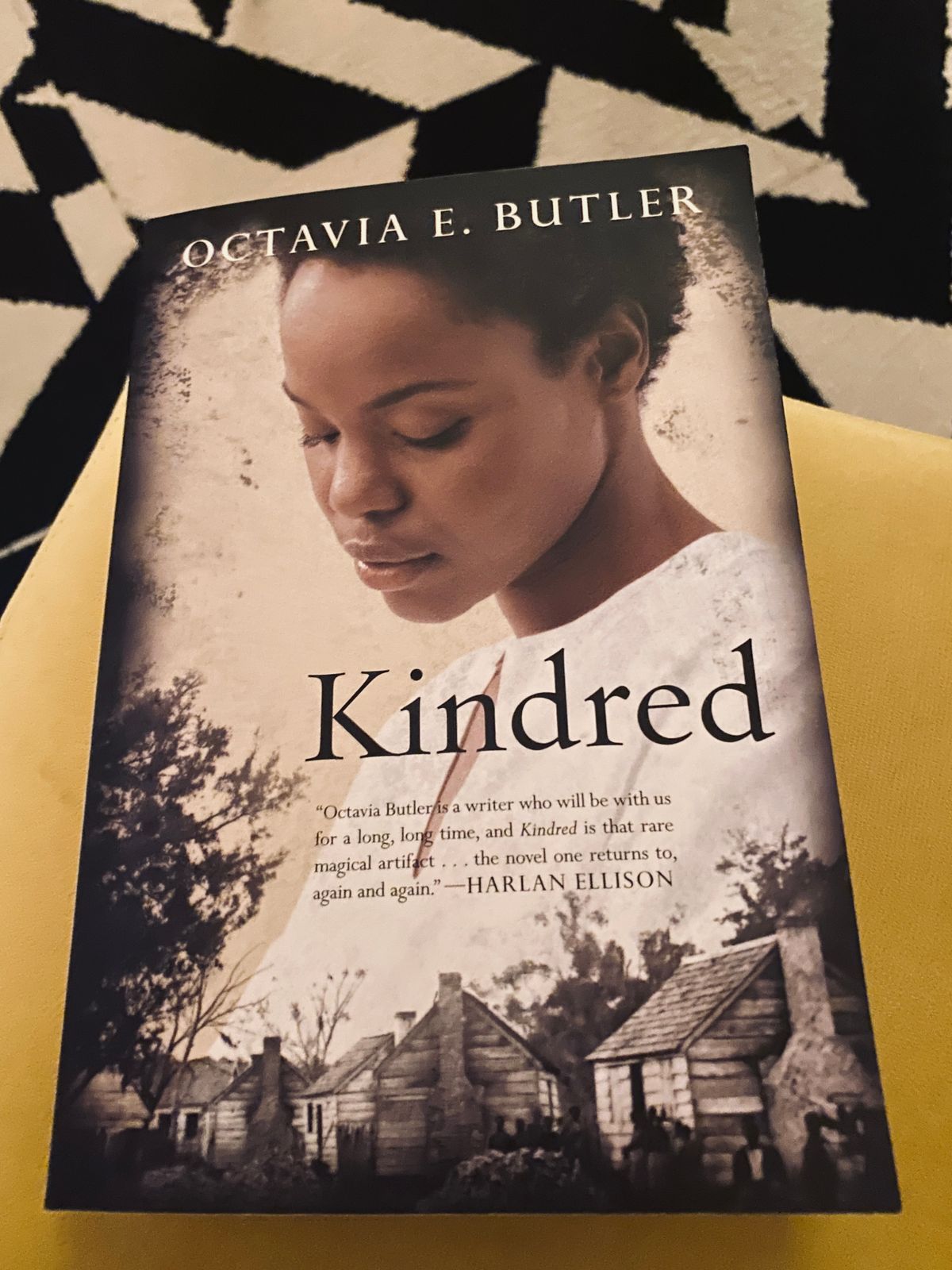
I gave myself a challenge: take the day to read Kindred, the immersive, time-travel novel by Octavia Butler.
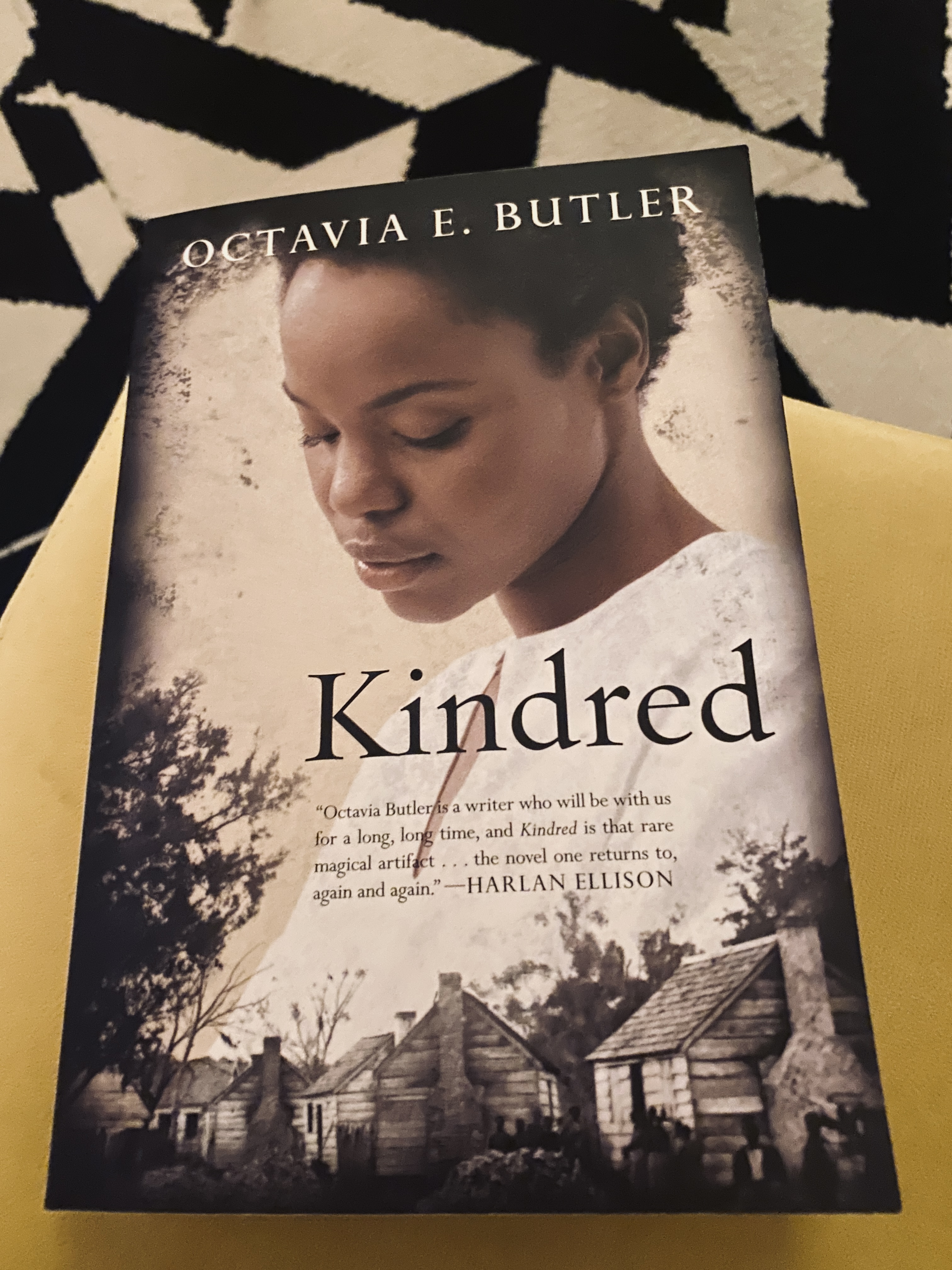
Setting myself the task of reading it in a day was also a bit of a lark, since I heard there’s a new series from FX that debuts this week and I wanted to read the book before I watched the series. I was also in a lull between the end of classes and the start of grading, so I had the time.
In Butler’s story, an African American woman named Dana is whisked away from her 1976 Los Angeles reality and onto the early 1800’s plantation of one of her ancestors. The central device is that Dana gets “called” by her great-great-grandfather, Rufus, every time he is in some kind of danger. She has to save this slave-owning ancestor if she is to ever be born, even though she wants to kill him in order to free her enslaved ancestors.
It’s a powerful read, and sometimes, it’s hide-your-eyes-painful to read because Butler is, of course, trying to make a point about the proximity of slavery to the present. Here’s Gabrielle Bellot, writing at Lit Hub, about this:
“No matter how long ago slavery might seem, it is always disquietingly close to us, both in time and memory.”
It feels close when you read it. I want to understand better the how of Butler’s craft, how she gets that feeling on the page. New York Magazine recently spoke with a collection of writers about how to write like Octavia Butler (as if), but devour it I did.
Lots of good advice: forget subtlety (N.K. Jemisin), have a sense of humor (Nola Hopkinson), be pragmatic (adrienne maree brown). But the craft lesson I wanted isn’t there.
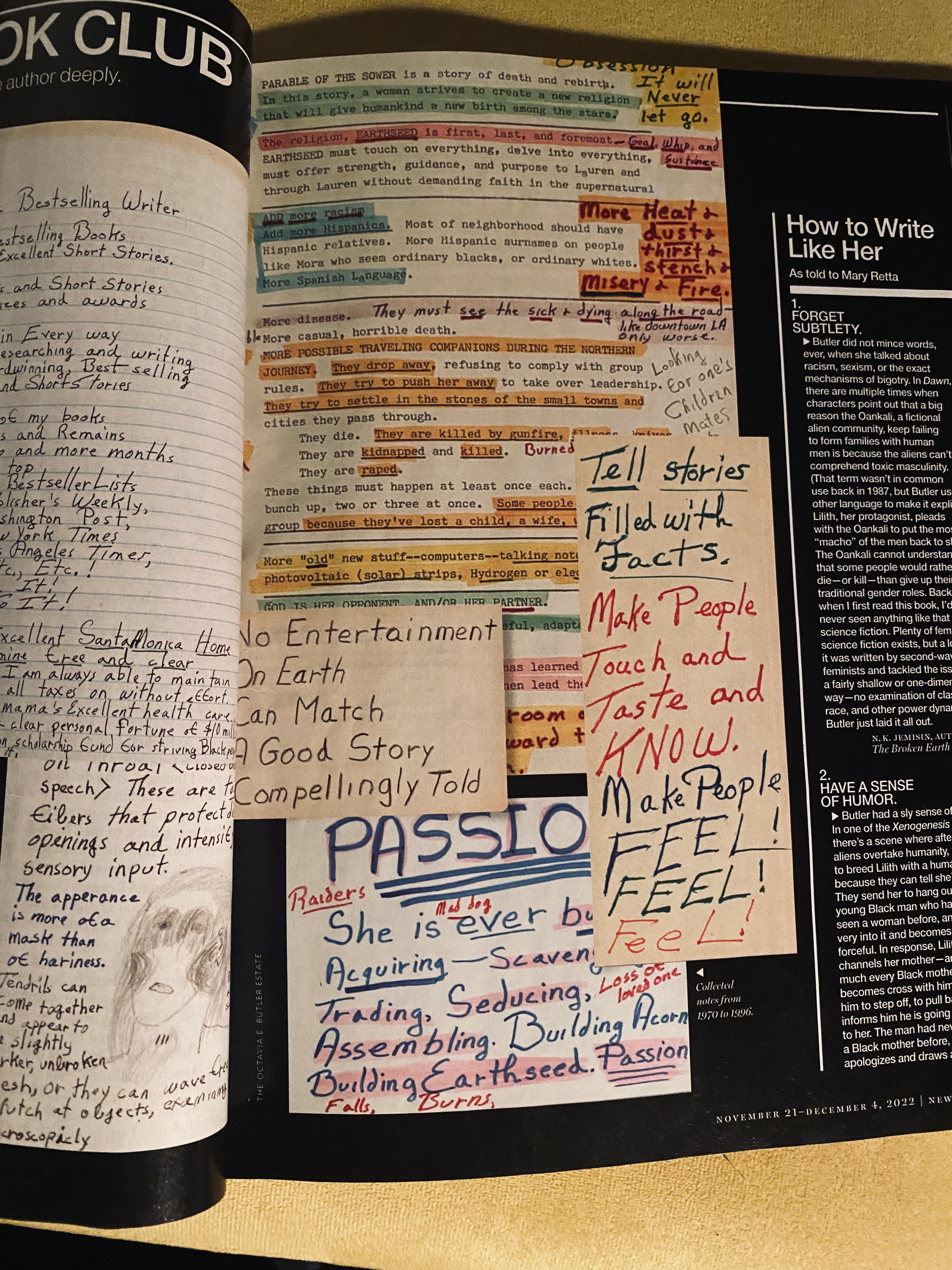
It’s in her journals. In the print-version of the same issue of that magazine, there’s a section on her journal entries. One of those reads: Tell Stories Filled with Facts. Make People Touch Taste and KNOW. Make People FEEL! FEEL! FEEL!
Whew! Does she ever. Thank you, Octavia Butler, wherever you are on the time-space continuum.