Learning from Nikki Giovanni
On "Going to Mars"
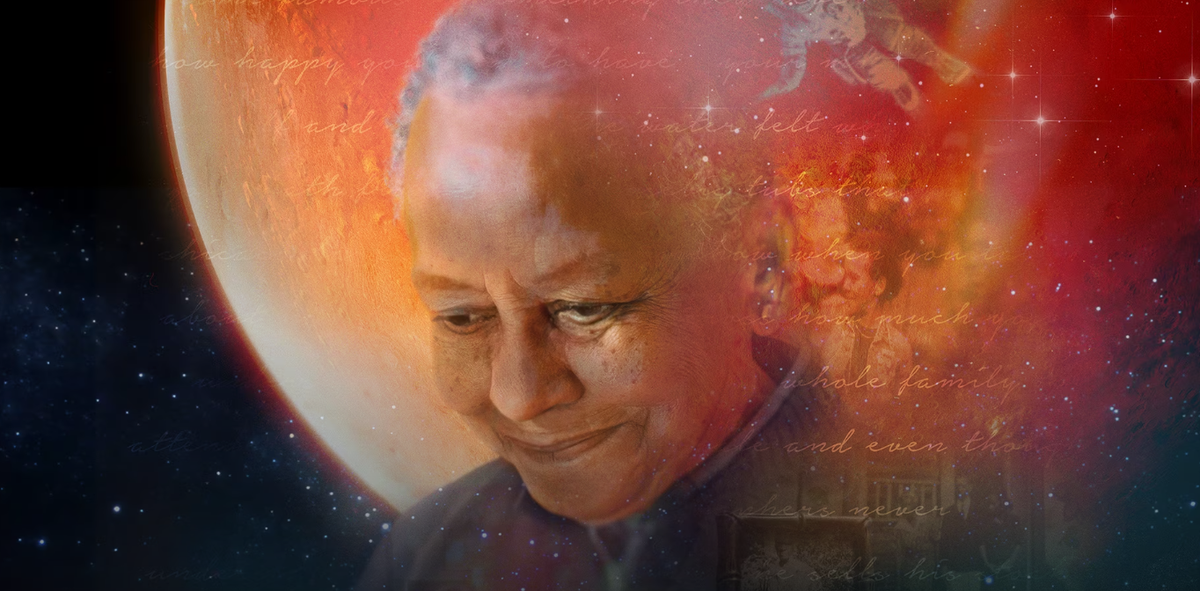
Last week I wrote that Black feminism is for everybody, and promised to share some documentaries around this theme. All of the films I’ll discuss this week have stayed with me in a rather profound way, so I share these here with the hope that you will let them transform you. First up, is the marvelous 2023 film, “Going to Mars: The Nikki Giovanni Project.” The title of the film is a reference to one of her afrofuturist poems, Quilting the Black-eyed Pea, (We’re Going to Mars).”
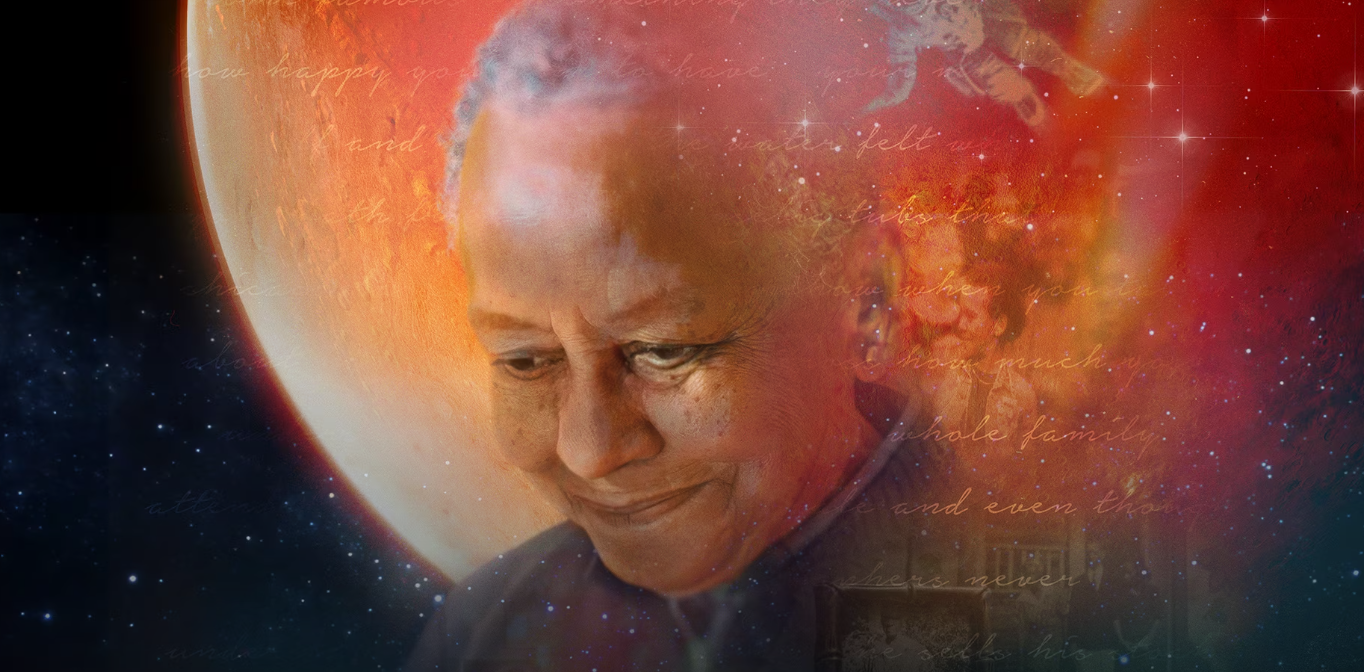
I love this documentary so much I’ve watched it four times now. Giovanni is a beautiful, cantankerous old dyke that I recognize from her sartorial choices, includinga big, loose-fitting cotton shirt topped with a tie in a half-Windsor knot, and her absolute refusal to tolerate fools or their questions.
The film offers a different look at a widely shared exchange she had with James Baldwin in 1971 on a show called “Soul!” taped in London. The way we’ve often seen that interview, the clips favor Baldwin in subtle ways. This film reconfigures their conversation in a way that we can see how forceful and confident Giovanni is, at just 28 years old, compared to Baldwin who, at 47 years old, is almost twenty years older and a well-established writer and public intellectual. Part of what Giovanni challenges him on is the way patriarchy damages Black families as much as any other families, a point Baldwin seems reluctant to concede.
Several times in the film, Giovanni refers to her father as “cruel.” He was also violent. These facts were never discussed in her childhood home, even when she asked to leave that home to go live with her grandmother because, she says knew, “one of us was gonna end up dead.” Years later, after she has had success as a poet and an academic, her father is ailing and comes to live with her. It’s then that she comes to a kind of forceful peace with him. She’s not bitter, but rather clear-eyed about what she will and will not tolerate. The truth-telling she does about her family is liberating and healing.
I also appreciate that the filmmakers (Joe Brewster and Michèle Stephenson) include that she’s been estranged from her son and they are getting reacquainted now, but they don’t linger on her role as mother. Instead, the focus is on her, and mothering is something she did, but it doesn’t define her entire identity. I find this refreshing in the midst of the totalizing hagiography about motherhood that exists in contemporary culture, as if Adrienne Rich never wrote, Of Woman Born. The ideology that surrounds motherhood works as a kind of consolation prize for not having real power or access to resources in this society. There is a way that Nikki Giovanni both defies this even as she reclaims her relationship with her son and granddaughter.
In the film, Nikki Giovanni reads her poem, “I Married My Mother,” (here’s a clip of a different reading of the same poem). Her poem reminded me of a book, Every Woman I’ve Ever Loved: Lesbian Writers on Their Mothers. It’s a connection I wonder about often because I didn’t come out as queer until after my mother died, which raises an ontological question for me: would I have been queer had she lived? I honestly don’t know, indeed can never know the answer to this counterfactual (would I have been queer had she lived?), but my hunch is that her death gave me a kind of freedom to find a more authentic life for myself. But the film isn’t a meditation on her sexuality, that is my resistive read, which is rooted in a desperate need for queer elders.
The film combines archival footage of Giovanni and moments in Black history, juxtaposed with images of space, and this is what anchors the film. Giovanni and the filmmakers subvert our received notions of colonizer-led, male-dominated, phallus-shaped-rocket-ship notions of space travel by insisting that we consider her wish to launch into outer space and “die in zero gravity.” This is not a death wish, but rather a desire to learn from and layer onto the wisdom of Black women who endured the Middle Passage, the violence of chattel slavery, and did not merely survive but loved. Giovanni says:
I’m a big fan of Black women because in our blood is space travel. We’ve come from a known, through an unknown to an unknown.
To be fair, I don’t always agree with Giovanni’s politics. And, there are places in the film where she is at odds with the political movements of her time, from Civil Rights to the Women’s Movement. That being said, at a time when there is so much upheaval, violence, and despair in the culture, Giovanni urges us to imagine an afrocentric future to reconfigure a present, a present in which Black women have shown us how we might survive all the hardships thrown at us on Earth.