National Nurses Day
On Whiteness + the Harm of the "Helping Professions"
It’s National Nurses Day, a thing I know because I saw a trending hashtag on the socials, and that’s as good a peg as any to hang these words on. None of what I’ve read on that hashtag has mentioned the harm in the notion of the so-called helping professions, so here I come.
To begin, I should tell you that an African American nurse saved my life once in Houston. She did this life-saving act by talking to me like a sane person in the midst of a psych hospital intake and telling me, in quiet but firm tones, that I needed to get away from there and “put as many states as possible” between me and my father. I did that, and survived, in part thanks to the morsel of reality-based truth she offered me that day in 1995. Our encounter that day, me a white woman who was the patient and her, a Black nurse, was unique for many reasons, including the way it reversed the usual white hegemony of nursing.
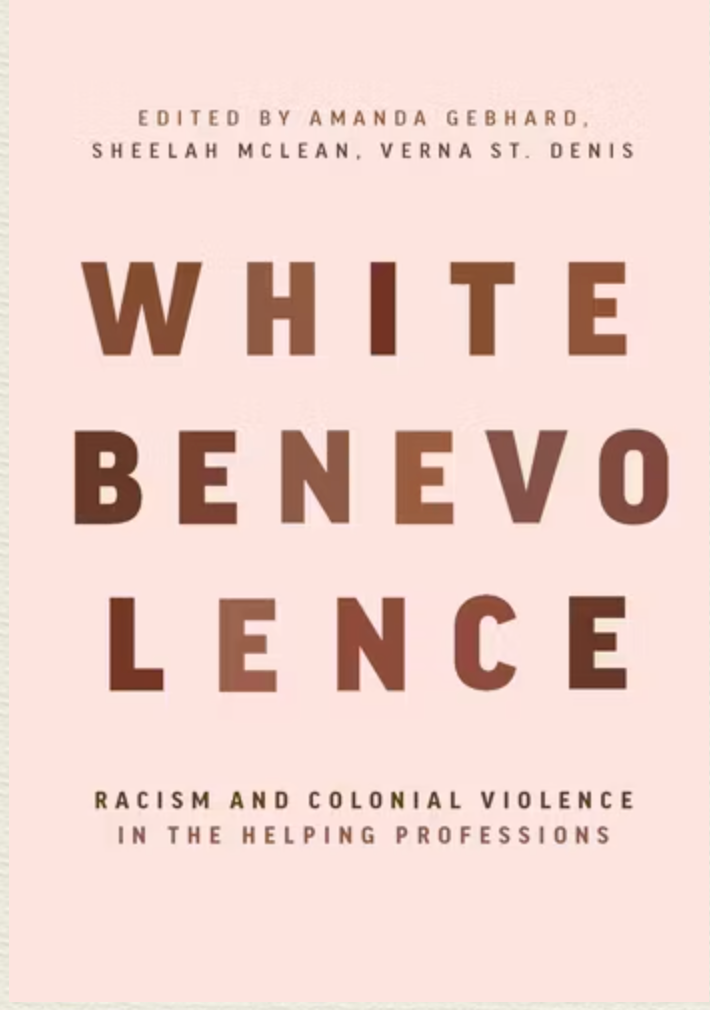
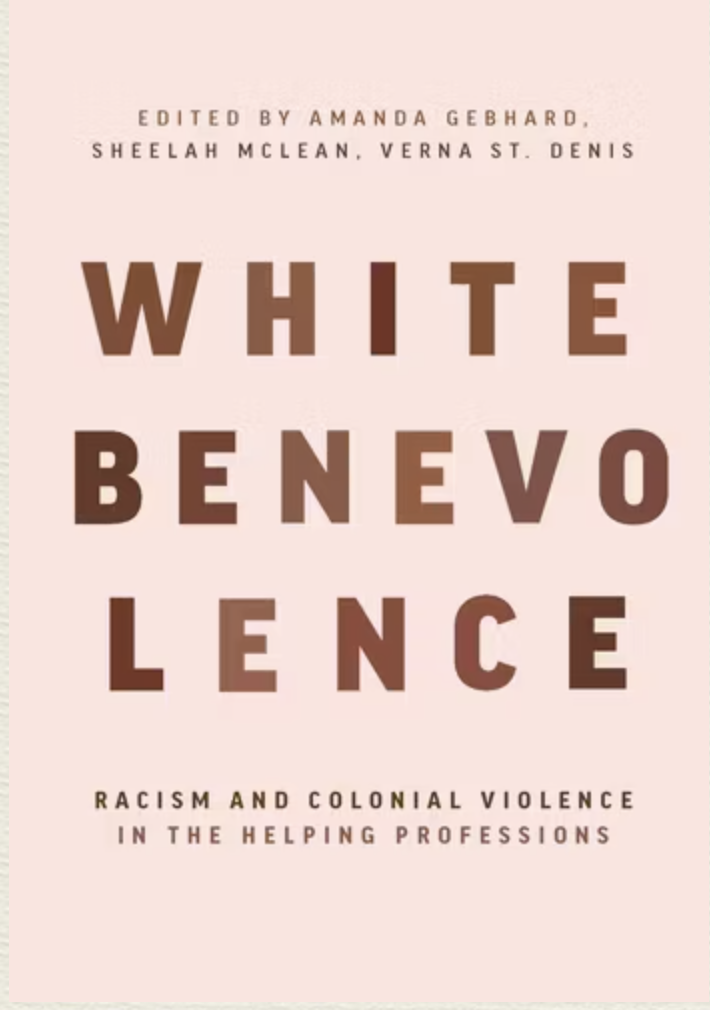
Nursing, like all the so-called helping professions, is dominated by white women. In nursing in the U.S., roughly 87% of all those working in nursing are women, and around 66% are white (insert my usual gripe here about the lack of race AND gender tables). Similarly, the other helping professions such as social workers, teachers, public health workers are all fields in which white women are the overwhelming majority of those employed. It’s not only the U.S. In Canada, several Indigenous scholars have published an edited volume that addresses just this problem, White Benevolence: Racism and Colonialism in the Helping Professions.
One of the contributors to this volume, Sharissa Hantke, writes about nursing in Canada. In this article from 2022 in the journal BMC Nursing, Hantke and colleagues get to the crux of the matter when they write:
Nursing approaches intending to respond to racism often focus on culture without critically addressing the roots of racist inequity directly. In contrast, the critical race theory approach used in this study identifies whiteness as the underlying problem; a system of racial hierarchy that accords value to white people while it devalues everyone else.
While this passage is specifically about nursing, you could just easily do a Ctrl+F+Replace and substitute social work, teaching, public health, or psychotherapy for nursing. To stay with the example of nursing, the observation that Hantke and colleagues are making — that whiteness is the underlying problem — is one that I’ve been making here and elsewhere.
If whiteness is the problem, this raises another set of questions about what the harm is in this? And, of course, what we do about this?
Some white-raised nurses have begun to recognize their own privilege and this is a good first step but it does little to hold individual nurses accountable for the harm they do in reinforcing whiteness nor does it get us any further down the road of addressing this problem. Acknowledging one’s privilege without doing anything about harm or solutions can become a spiral of shame and inaction. The harm is real, make no mistake.
Pat Deegan, a psychologist, writes that the helping professions often dehumanize and depersonalize those who come to receive their services. Deegan writes that those who are meant to provide care for people with physical disabilities and psychiatric disabilities calls this phenomenon "spirit breaking." While Deegan is describing the nurse-patient relationship here, I think spirit breaking could be extended to the way that nurses treat others in the profession. The most egregious example of spirit breaking in recent memory has to be what happened to Colorado nurse DonQuenick Joppy.
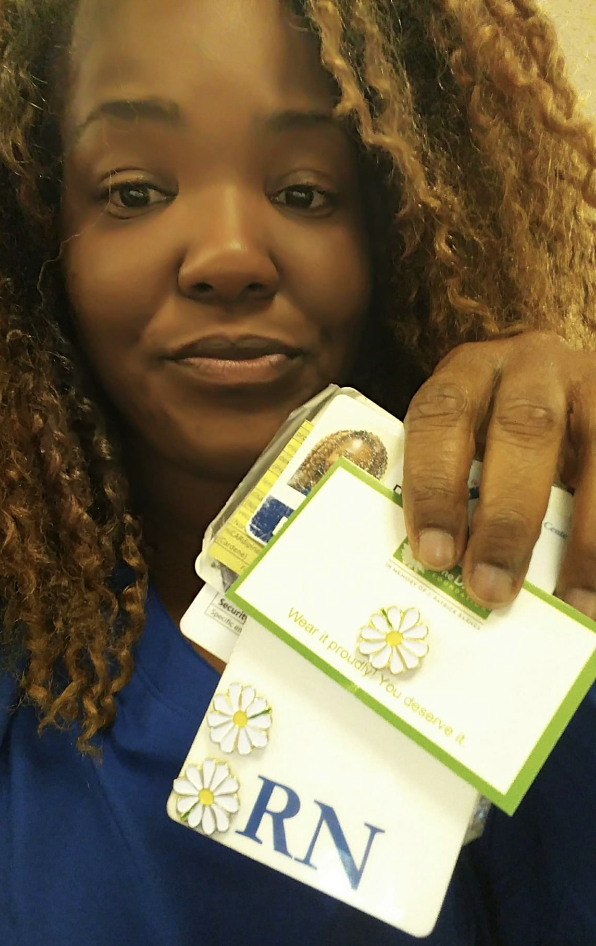
In 2019, after caring for a terminally ill 94-year-old patient at a hospital in Aurora, Colorado, Joppy was fired, stripped of her nursing license and, in 2020, charged with manslaughter. The criminal charges, brought by the Colorado Attorney General’s Office, were dropped in 2021 at the prosecution’s request “in the interest of justice,” as the Denver Post reported. Yet, the ordeal has left Joppy “pretty much homeless.” In 2022, Joppy filed a federal racial discrimination lawsuit against her former employer, The Medical Center of Aurora, the hospital owned by HealthONE, which operates several hospitals in the Denver area. “It’s wild,” Joppy told a reporter for the Denver Post. “My life has been turned upside down… I never killed anyone. I’m a great nurse.”
The reason I know about Joppy is that several people close to this case have reached out to me. Thanks to the resources they’ve sent me, such as this, this, this and this, I’ve come to understand the way that the harm done to Joppy is directly related to the white hegemony of nursing.
It’s a complicated story but the details are this: an elderly patient died on Nurse Joppy’s shift, and she even stayed two hours passed the end of her overnight shift to take care of this patient. According to reported accounts, a doctor treating the patient gave a verbal order for “end of life” measures to another nurse, who delegated the order to Joppy. Joppy then called a respiratory therapist and followed his instructions for turning off the ventilator. The therapist visited the patient shortly after that and disconnected the ventilator, the complaint claims. The patient then died, cause of death: natural causes. It was after the patient’s death that a white supervising nurse in the ICU began to raise questions about how the death was handled. The hospital administration, led by another white woman, then investigated the death and found Joppy at fault because she hadn’t waited for the respiratory therapist to arrive before turning off the ventilator, and I cannot make this up:
The hospital also cited Joppy’s choice to stay after the end of her shift as reason for termination, but that’s common practice in the hospital…(from here).
I don’t know of another profession where you can get penalized for working overtime. The key point here is that it was Nurse Joppy, one of very few Black nurses, was singled out for behaviors — staying late at work to care for a patient — that surely other nurses, white nurses have done and gotten a reprimand, if that, whereas Joppy was fired, criminalized, and continues to struggle from what sometimes gets mislabeled “microaggressions” at work. But there was nothing “micro” about this campaign against Joppy. This was a trauma, led and inflicted on her by white women, and one from which her attorney says she still has not recovered. “She’s pretty much homeless now and hasn’t recovered since all of this happened,” her attorney said. “It’s just not cool to treat people this way.” If you’d like to show your support for Nurse Joppy by moving some money her way, you can that at this link: http://spot.fund/13t5qsc
Even with the groundswell of support from tiny media outlets (like this blog and the newsletter a handful of you are reading) and bigger ones (like Daily Kos, YahooNews, and the Denver Post), it’s still not a national story. Perhaps we can change that?
I appreciate the coverage on this story, but we’ve also got to do better than what’s out there. Take the Denver Post article, which I’ve quoted from several times here. The headline on that story is:

To frame the story this way, “Black nurse claims,” is to first call attention to race as ONLY something Nurse Joppy has. No one else in either the headline or the story is identified by race. Further, to insert “claims” leaves the accusations in the realm of the unproven, a question mark. Now, I’m fully aware of the journalistic standards that helped create this headline, but think about how this shapes our understanding of this case, and the broader issues I’m raising here about what happens when white women are in hegemonic positions within professions. This framing limits our understanding of what is really happening here because it obfuscates whiteness. This is part of what Joe Feagin has called “the white racial frame,” which means that all of our interpretive lenses are steeped in whiteness.
We’ve got to find ways to break out of this frame so that we can see the world clearly.
Scholars Lisa Spanierman and Laura Smith argue that those who want to confront white hegemony in the helping professions must uproot the colorblind ideology that has informed training programs since the 1990s. How to break out of colorblindness? A good start to that is naming whiteness and the harm it does in the helping professions.