The Forgotten Radical Potential
On Megan Rapinoe, "Weird" Barbie and Hetero-Patriarchy
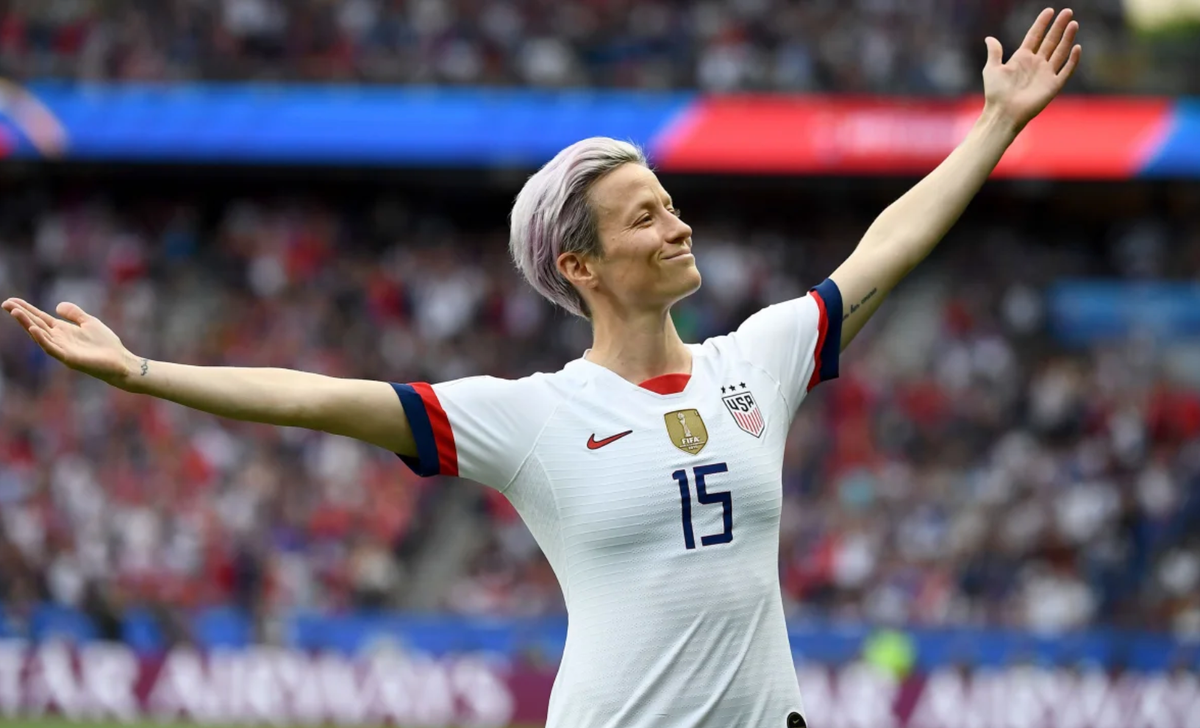
Megan Rapinoe, star athlete, inspiring role model, and advocate for gender and racial equity in sports, is retiring from soccer and expanding her political vision for the future. I will always love her for this striking this iconic pose after scoring a goal against France in a 2019 match. I love her politics, too.
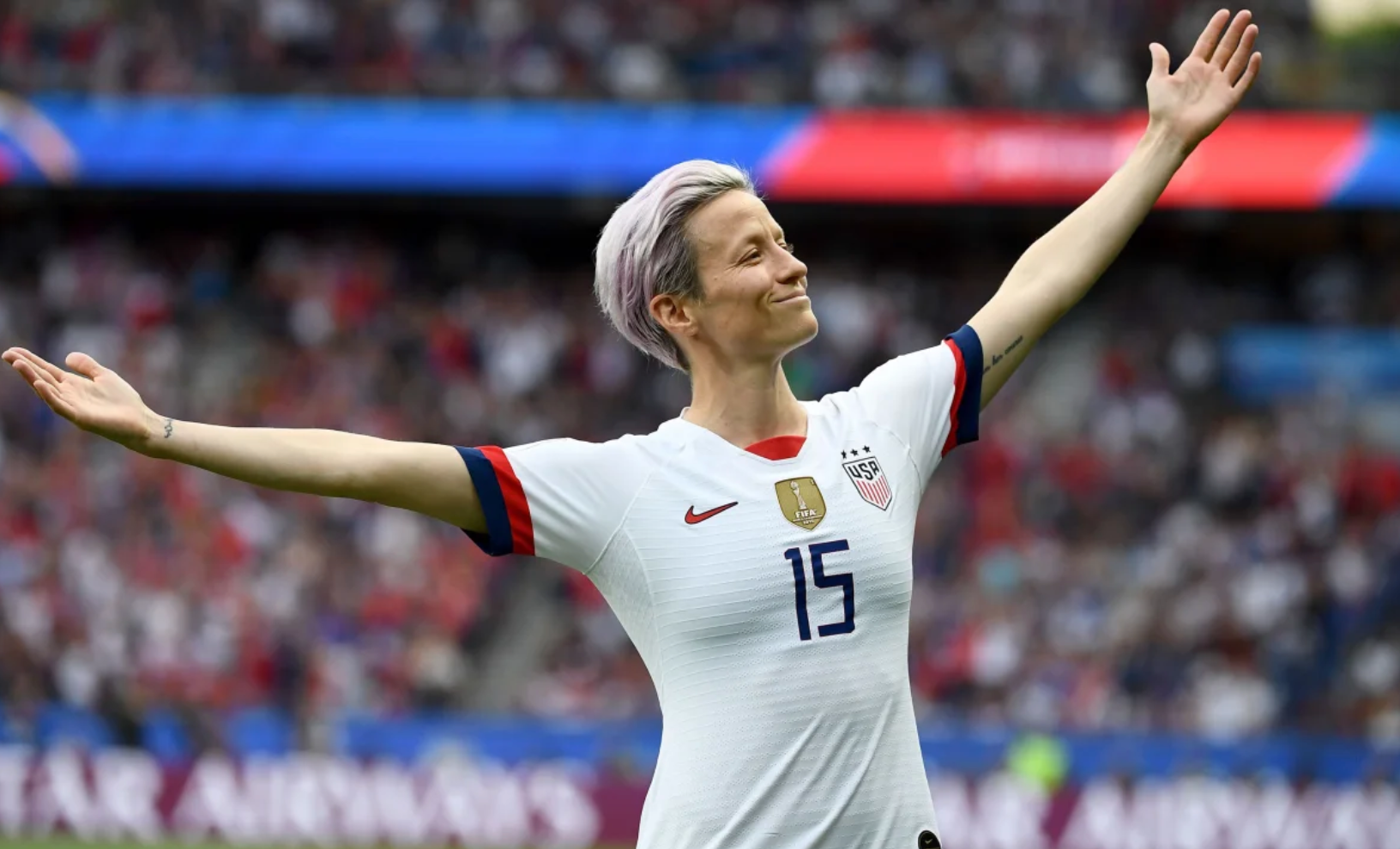
I so appreciate Rapinoe for the way she’s using her platform to advocate for social justice. She’s doing this in an expansive way, not just narrowly focused on pay equity for women in soccer (gender-only feminism), but in a more expansive way that recognizes the connection to issues of race and class (intersectional feminism).
“It’s going to take an army of us …white women to get the white women in order; I’m like, ‘They’re coming for us, you guys,’” Rapinoe told a reporter for the Seattle Times recently. “That’s something I’m conscious of, being of extreme privilege the way that I am. I know I’m gay and a woman, but I have so much privilege in that space to call people in and dispel some myths.”
I mean this sincerely: g-d bless any white woman with that kind of reach who is trying to get white women in formation ahead of the 2024 election cycle. (Can someone please get her a copy of Nice White Ladies for me? I think she’d love it. Just putting that out into the universe.)
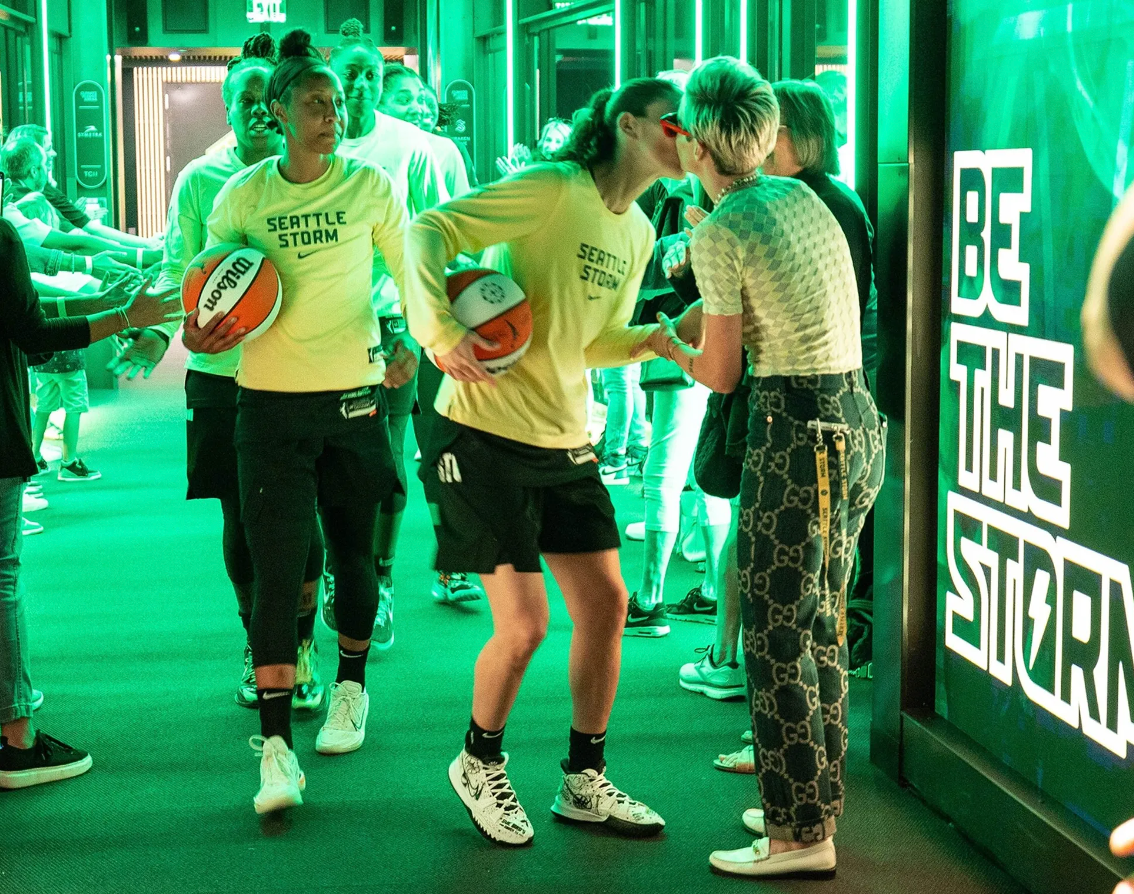
It’s refreshing to see another lesbian being political in this way. Rapinoe seems to have a deep grasp of what we’re up against and that what’s coming has the potential to be horrendous, folks. Unless we fight.
The Heritage Foundation, the neocon think tank founded by Joseph Coors, has just released “Project 2025,” which they call a “blueprint” for Republican leadership in the near future. The 920-page (!!!) PDF calls for erasing any mention of sexual orientation and gender identity from all existing federal laws, agency rules, and regulations, as well as mentions of “diversity, equity, and inclusion (DEI) initiatives, gender, gender equality, gender equity, reproductive rights, and “any other term used to deprive Americans of their First Amendment rights.” Obviously, this has nothing to do with protecting “free speech.” This is a sinister dog-whistle to signal anti-LGBTQ+ feelings that can be mobilized into political action. The report equates any queer content as “pornography,” and includes this bit of fear-mongering:
“Pornography, manifested today in the omnipresent propagation of transgender ideology and sexualization of children, for instance, is not a political Gordian knot inextricably binding up disparate claims about free speech, property rights, sexual liberation, and child welfare.”
This is what Rapinoe means when she says, “They’re coming for us.” Indeed, they are.
One working theory I have for why the far right is coming for us (around the world) has to do with representation. Thanks to our collective involvement in the creative arts and to organizations like GLAAD and their Media Awards (now in its 35th year), queers have made a lot of progress on screen. The recent docuseries, “Visible: Out On Television,” chronicles this history. Yet, there are still ways that we, and here I mean lesbians in particular, are rendered invisible.
In Greta Gerwig’s “Barbie,” one of the summer’s blockbuster, feel-good films, and very long advertisement for Mattel, was heralded as a “the feminist movie we didn’t know we needed,” by many. Still others were critical of the film’s version of girl-boss, white feminism that left out many of our sisters from around the world. The film includes a trans actor in the film, Hari Nef, who plays a minor role that has the far right losing their minds. [spoilers follow - stop reading if you haven’t seen the film and don’t want to know what happens.]
To me, the film was a fun romp if you didn’t think too deeply about any of it, but of course, I am incapable of that, both by disposition and by training. The take-away from the film was a rather sad commentary on the forgotten radical potential of feminism to smash hetero-patriarchy. This was clear to me in the character of “Weird Barbie,” who doesn’t dress or wear her hair like the other Barbies. She also possesses knowledge about the connection between the dolls and their respective children, making her an outsider, different than the “stereotypical” Barbies. The character is played by actor Kate McKinnon, who is herself, an out lesbian. But there is no moment in the entire film where the queerness of that character is acknowledged. Nor have their been press reports McKinnon’s queerness as there have been about Hari Nef.
Instead, we’re left with a story in which Ken’s feelings of inadequacy are soothed when he enters the real world and discovers patriarchy. Sure, this is played for a laugh, but even within the film’s logic Barbie is still beholden to Ken in ways that are baffling except if we read the film as a form of propaganda for hetero-patriarchy, with its subtext of violence and the threat of violence. Barbie ultimately decides to leave the fantasy-world of dolls to join the human-world of people, and the film ends with her going to her first gynecology appointment. In my most generous read of the ending, this is a joke about the genital-less nature of the doll, but I also had the uneasy feeling that this was somehow a wink and a nod to the reanimated biological determinist view behind the how-do-you-define-woman crowd.
What’s ironic about all this is the way that the radical, liberatory potential of queerness, and specifically being a lesbian, seems lost to so many on the left. Even the fact that Rapinoe and McKinnon (among many others) the term “gay” instead of “lesbian” is ironic in some ways given the decades-long political battle fought over lesbian invisibility. The “L” comes first in our ever-expanding acronym because dykes stood up and refused to be erased by gay men or society at large.
The gay liberation movement, which spanned the decades of the 1960s and 1970s, imagined a world in which “everyone was gay,” and the liberation was in acknowledging that. Back then, when people encouraged others to “come out,” it wasn’t so much about a stable, inner-core of identity but rather about embracing the radical potential to reimagine sexuality unmoored from heterosexuality, patriarchy and capitalism. It was an idea about sexuality that was fluid, across genders, and was rooted in a Freudian notion of polymorphous perversity, which refers to a kind of primordial “attracted to everyone” stage of sexual development. This fell by the wayside as gay men gained more social power and embraced “gay” as an individual identity that remained fixed over a lifetime.
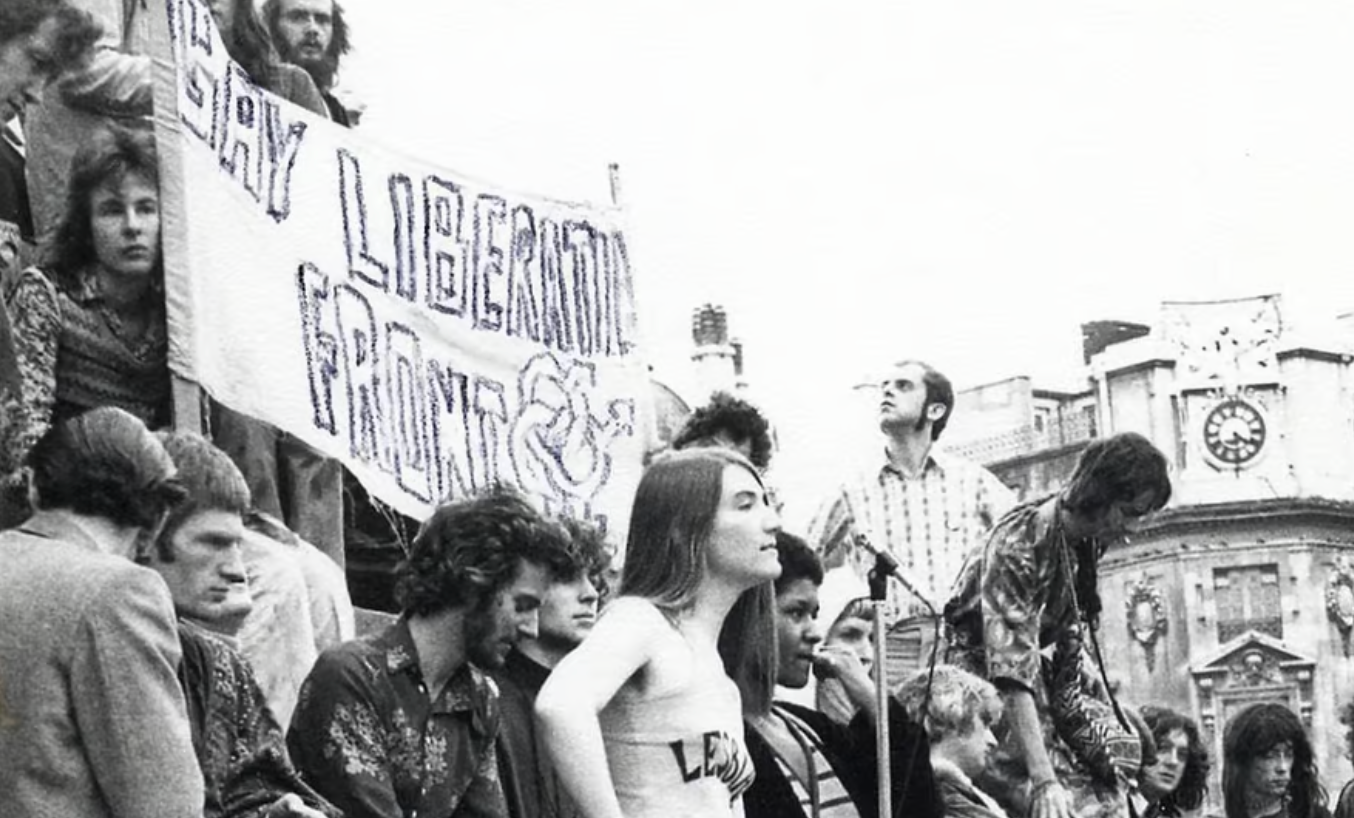
When I was coming out in the late 1980’s and early 1990's in Austin, Texas there was still a whiff of radical-lesbian-feminism in the air. Nestled within this was the idea that “feminism was the theory, lesbianism was the practice,” a phrase that is attributed to Ti-Grace Atkinson, the firebrand from Baton Rouge, Louisiana. Atkinson was an early member of the National Organization for Women, before the days of the “lavender menace,” Friedan’s attempt to clear the organization of lesbians for fear of hurting the cause. A bunch of radical dykes, including Karla Jay, reclaimed the phrase to demand that the feminist movement take their concerns seriously. These were my heroes.
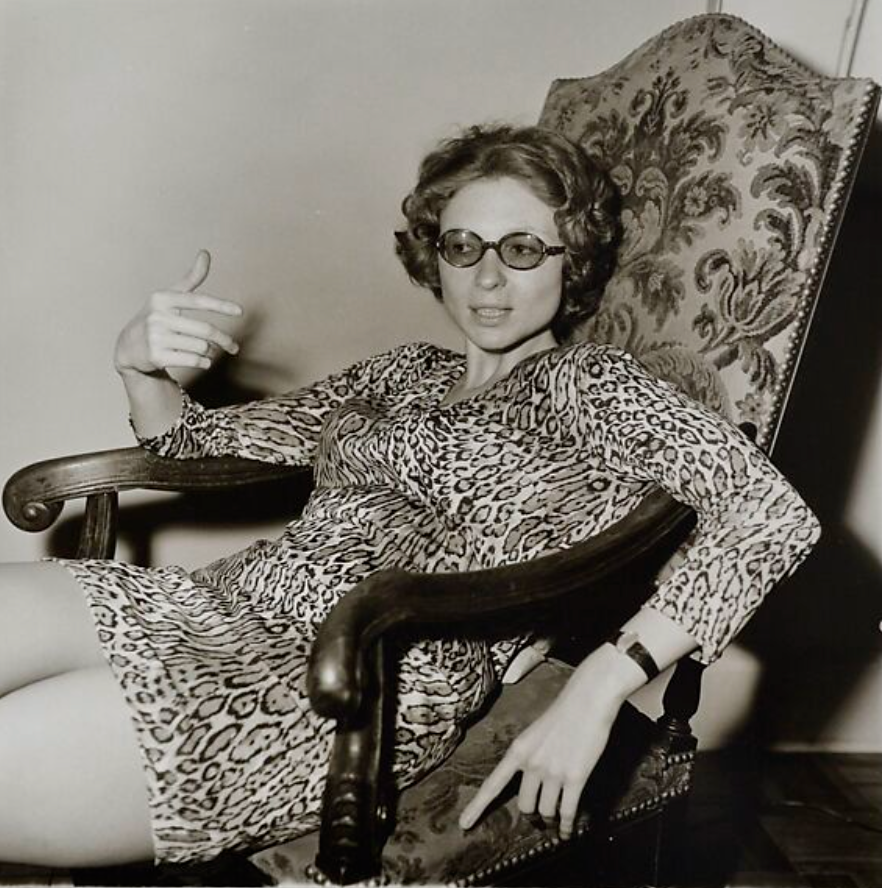
The summer after my mother died, in 1983, I took my first women’s studies class (likely called something cringe-y like “Sex Roles”). That was the first time I read Adrienne Rich’s “Compulsory Heterosexuality and Lesbian Existence” (1980). Rich makes the claim that women are not inclined toward heterosexuality, but rather have it forced upon them. She argued, quite persuasively for my 21-year-old self, that heterosexuality is not a natural condition for women, but it is an institution, that requires women’s participation for it to continue. For evidence of this, she pointed to women’s “intense friendships” with other women, relationships that sustain them emotionally while they make economic alliances with men for survival. Thus, for compulsory heterosexuality to persist, women must be “groomed” for it (to use a current phrase), and coerced in various ways, through economic need and propaganda mostly, and when those fail, through violence.
It took me another seven years (and, yes, a second marriage), but I was eventually able to break free from the trap of hetero-patriarchy and that has quite literally saved my life and expanded what is possible for me. I wonder if I would have had the courage to come out if my mother hadn’t died and that is a complicated grief tinged with a deep joy and gratitude for the life I’ve built.
But, as radical socialist feminist Sanjana Pegu points out, “Breaking free is a magic wand not accessible to all. Then there are factors of race, religion, caste, community, disability that necessitate the performance of heterosexuality, coerced or not.” My ability to break free was made possible by these larger forces that shaped me, a dialectic between structure and agency. Sanjana Pegu puts it this way, “Compulsory heterosexuality, like all anachronistic, patriarchal, and capitalist systems, should be dismantled; the question is who gets to lead and participate in this revolutionary project.”
In the era of “Born This Way,” we have lost a great deal. This fun bop by Lady Gaga is has a terrific dance beat but is a limited strategy for liberation. To really get free we on the left need to reclaim the forgotten, radical potential of gay liberation and lesbian feminism, because those on the right see it clearly.
And they are coming for all of us.