Valentine's Day
And why we deserve better than "vagina feminism"
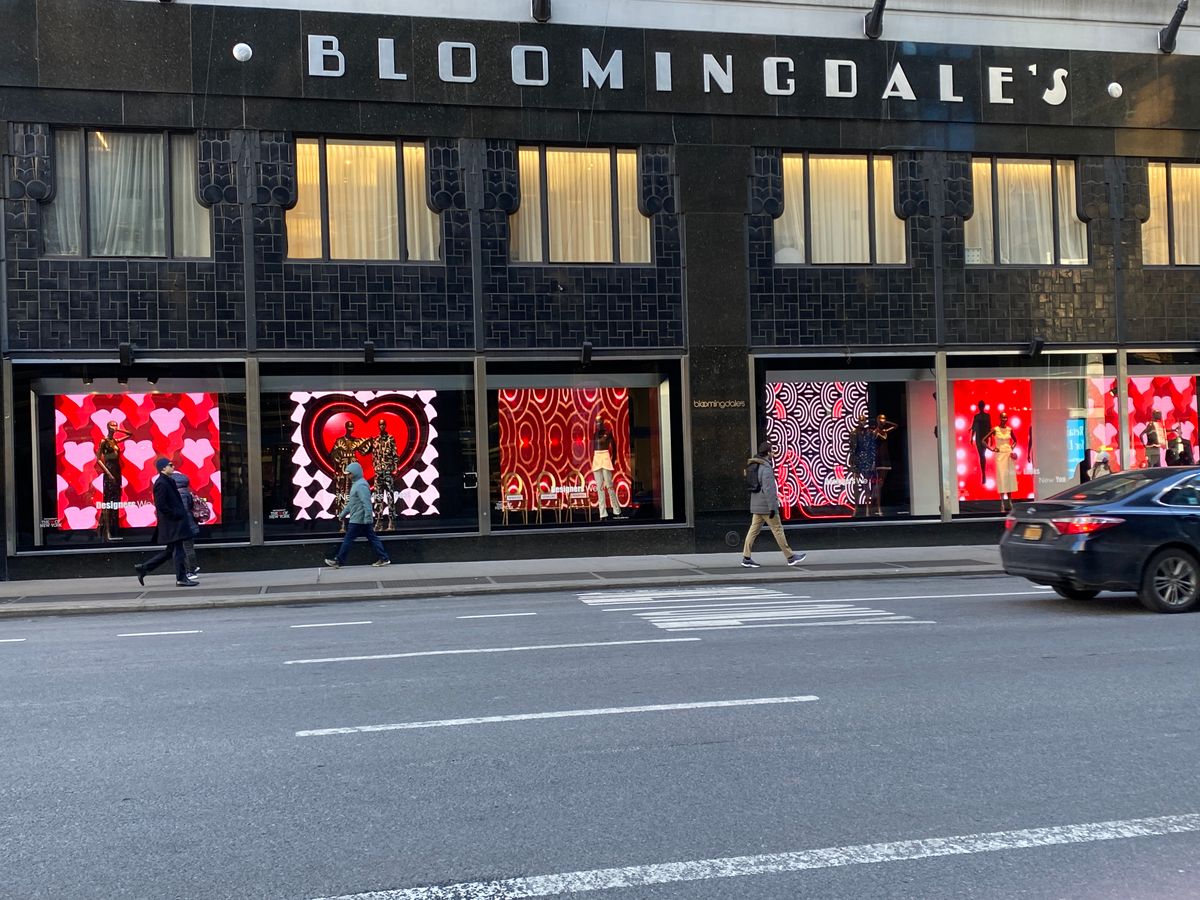
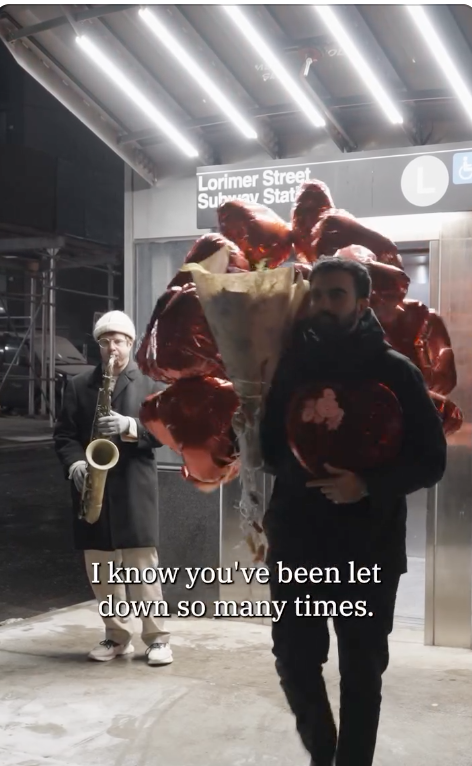
It’s Valentine’s Day here in the U.S. It’s a bonanza for florists as sales typically increase by about 22% on this one day. It always takes me a minute to join the dots when, on any given Feb.14, I see three men in a row carrying huge bouquets of flowers, as I did this morning when I ran an errand and passed by the department store above. But hey, I’m all for love and it warms my heart to see so many men walking around carrying bouquets of flowers on any day. Make no mistake though, this is primarily a commercial holiday that began to be celebrated in the U.S. in the 1840’s.
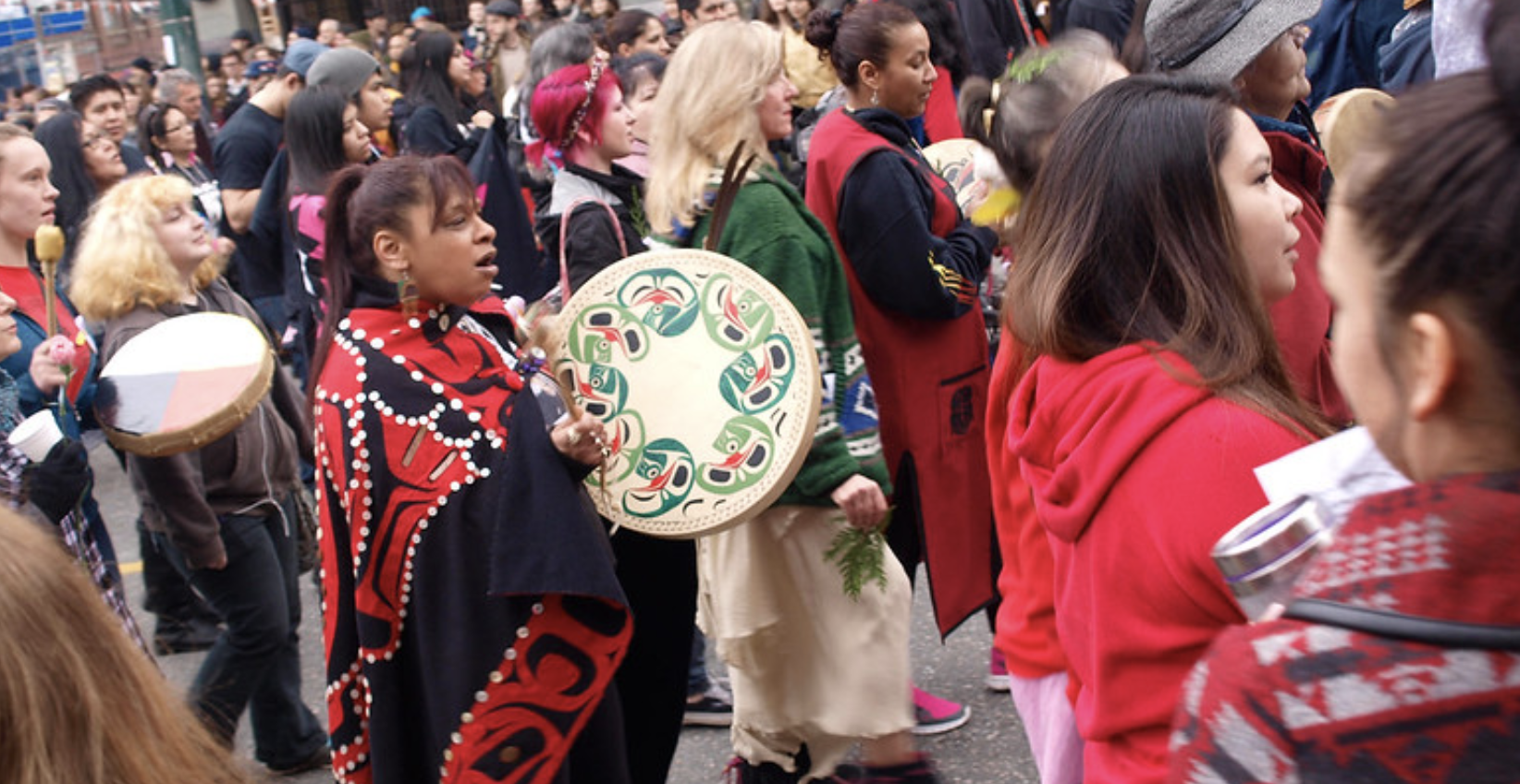
In Canada, today is the Women’s Memorial Day March intended to honor women who have been murdered and gone missing in Vancouver since 1980. This memorial is organized by indigenous women and the focus is meant to be on the disproportionate number of indigenous women who have gone missing and been murdered. The Women’s Memorial Day March began in 1992.
If you’re in the U.S. and been exposed to any kind of feminism, you’ve probably been to, heard about, or even been involved in a production of the “Vagina Monologues,” often staged on college campuses around February 14.
Herein, lies a problem. The problem is what I call “vagina feminism.” You know, feminism only for people with vaginas. As bell hooks taught us, feminism is for everybody. Every. Body. Not just those with vaginas. How silly. I wrote about some of this in Nice White Ladies and what follows is an excerpt from the section called, “Vagina Feminism.”
“Women are women everywhere and they all have a vagina,” Eve Ensler has said of her play The Vagina Monologues (TVM). When a reporter asked her if it is difficult to get women to talk about this, Ensler replied, “It’s not getting them started on the subject that’s the problem, but getting them to stop. Years and years of secrets and lies and tears and joys just pour out. The story of a woman’s vagina is the story of her life.”
The play was first produced in 1996 and since then has been performed annually at colleges, universities, and community groups on February 14, Valentine’s Day. The money from these performances goes to Ensler’s V-Day organization and is used to fund programs and campaigns to raise awareness about violence against women. Women from all over the world have been moved by the show and use it as a way to push for transgressive discussions about women’s bodies and the violence against them. In some countries, the women who stage the play do so at great personal risk. Understandably, Ensler is beloved by fans of the play who regard her as a feminist heroine.
Ensler interviewed women about their experiences with sexual discovery and sexual assault, and then reshaped their accounts into The Vagina Monologues, a series of dramatized individual stories. The staging of the play includes little set decoration beyond stools and microphones for the actors, who read from scripts directly to the audience. The actors read with accents, and the monologues depict experiences of women from around the world, such as “My Village Was My Vagina,” the testimonial of a Bosnian woman’s experience of sexual assault in the Balkan wars of the 1990s. Another monologue, “Under the Burqa,” opens with these lines: “Last year Eve Ensler had the opportunity to go to Afghanistan. There she witnessed firsthand what the outcome of misogyny would be if it were allowed to manifest itself totally. Under the Taliban, women are essentially living the lives of walking corpses. This monologue is for the brave, tender, fierce women of Afghanistan. That we may all rise up and save them.”
The monologues are meant to suggest a “global vaginahood” and to gesture at transnational feminism. However, the very way that play uses difference—this seemingly arbitrary collection of voices, and stories, and accents to represent “the global”—works to reinforce the normative voice of American whiteness that holds the play together. By using the vagina-self trope, Ensler reduces the differences between women. What this leaves instead of a global sisterhood is “a missionary feminism, where the (white, affluent, Western) feminist is positioned to aid, if not save, others by witnessing their pain,” as one scholar puts it.
In the monologues, direct representations of rape happen to women of color and women outside the United States. In contrast, the voices of white women with American accents have their vaginas and selves intact. White women in the imagination of the playwright, and by extension the assumed white female audience who are all at a safe distance from the most dire forms of patriarchal violence, act out the worst elements of white-dominated international feminism. Scholar Tani Barlow describes this kind of feminism as a whole “ideological package—a well-financed, resurgent, neoliberal, United States–focused effort to establish common ground” for gender politics throughout the world. This version of white feminism emphasizes saving women from the dark, Muslim Other in ways that often align with US military goals.
The emphasis on vagina as the catch-all term for women’s genitalia is an inaccuracy that has puzzled and infuriated women’s health advocates for decades. Since the 1970s, many advocates have had the difficult task of speaking honestly about women’s bodies in a culture that regards them with disgust and revulsion. This provocation is part of the impulse of TVM, which opens with the line, “I bet you’re worried,” playing on the cultural anxiety about the very word vagina. It is strange, though, that the play then perpetuates misunderstandings about female anatomy by collapsing labia, clitoris, vulva, cervix into the term vagina. But it is a misnomer that works well for the brilliant, and totalizing, brand enclosure around V-Day: Vaginas, Violence against Women, Valentine’s Day.
In the United States, Native American women are twice as likely to experience violence as any other racial category of women. In Canada, Indigenous women are experiencing a decades-long scourge of violence. According to a 2016 report, between 1980 and 2012, Indigenous women and girls represented 16 percent of all female homicides in Canada, although they only makeup 4 percent of the female population in Canada. They are also far more likely than other women to go missing. This alarming pattern of violence was the catalyst for an annual day of remembrance and mourning known as the “Memorial March for Missing and Murdered Indigenous Women” held in Canada on February 14. For more than twenty years, Indigenous women in Canada have led events on this date to commemorate those killed and to celebrate the strength and power of Indigenous women’s leadership. In 2013, the V-Day organization and Ensler’s more recent endeavor, One Billion Rising (OBR), her global antiviolence campaign encouraging women to report rape and sexual assault to law enforcement, made a move to launch their events in Canada. They claimed to want to “spotlight” the issue of violence against women. However, they did not reach out to the Indigenous women who were already doing that activism and had long-established events on February 14 in Canada. As a result, many Indigenous women began to speak out against Ensler. One of the foremost critics has been Native American feminist, educator, and writer Lauren Chief Elk. Following a phone conversation with Ensler, Chief Elk wrote an open letter to her and posted it online.
The letter is long, but two passages of it are especially relevant here:
This all started because on Twitter, I addressed some issues that I had with V-Day, your organization, and the way it treated Indigenous women in Canada. I said that you are racist and dismissive of Indigenous peo- ple. You wrote to me that you were upset that I would suggest this, and not even 24 hours later you were on The Joy Behar Show referring to your chemotherapy treatment as a “Shamanistic exercise.” …You asked me what would it mean to be a good ally. It would have meant stepping back, giving up the V-Day platform, and attending the marches and vigils. It would have meant putting aside the One Billion Rising privilege and participating in what the Indigenous women felt was important.
The “Shamanistic exercise” is a reference to In the Body of the World: A Memoir of Cancer and Connection, Ensler’s 2014 account of her diagnosis with cancer and subsequent travel to the Democratic Republic of Congo in search of alternative healing. In the book and conversations about it on television talk shows, Ensler equates her uterine cancer to the injuries of Congolese women who have been raped and suffered fistula, referring to the healing from these injuries as a spiritual experience, “Congo Stigmata.” Around the time of its publication, many writers, including Mikki Kendall and Mariame Kaba, wrote incisive critiques of the white savior complex and the cultural appropriation embedded in Ensler’s work, but those were drowned out by the PR machine behind V-Day and the white gender-only feminists who are the most ardent fans of Ensler.
The relevant issue isn’t simply about who Eve Ensler is as a person; it’s the cultural product of The Vagina Monologues and the work it does in the culture. TVM is an engine for reproducing a particular version of gender-only feminism and locking in the perspective of the normative, white female voice at the center of it. Because the play has been so widely adopted as a regularly calendared event at community centers, colleges, and universities, it has become an integral part of many thousands of women’s first experience of feminism. The play has shaped how a generation of women (those with and without vaginas) think about gender, sexuality, and difference. Even though the play gets updated each year, 1996 was a long time ago, and its roots in essentialist ideas about gender are being disavowed by more recent generations of college students.
“At its core, the show offers an extremely narrow perspective on what it means to be a woman,” read an email that circulated among members of Mount Holyoke’s theater group in 2015 when they decided to end the decade-long tradition of putting the play on at Valentine’s Day. These students argue that it does not do enough to include transgender people and people of color. The email went on to say, “Gender is a wide and varied experience, one that cannot simply be reduced to biological or anatomical distinctions, and many of us who have participated in the show have grown increasingly uncomfortable presenting material that is inherently reductionist and exclusive.”
In response, Ensler was steadfast in her defense of the play, saying, “I would like to believe that the play is outdated and irrelevant but sadly it isn’t. I travel the planet . . . [and in the United States and many countries] 51 percent of the population have vaginas and aren’t able to have agency over those vaginas. We know that one out of every three women will be raped or beaten in her lifetime—so we know we have a long way to go before vaginas are liberated.”
Responding to the Mount Holyoke students’ critiques about the representation of women of color, Ensler notes that “thousands and thousands of women of color [have] performed The Vagina Monologues for the last twenty years,” adding that the off-Broadway production featured a woman of color in each cast for four years straight. But the issue that neither the Mount Holyoke students nor Ensler address is the white, missionary feminist viewpoint at the center of the play. Within the boundaries of the play, women of color in the cast can only perform their vaginahood in relation to and in service to that voice.
The gender-only and vagina-focused feminism that animates TVM becomes more apparent in light of the growing awareness of trans peoples’ rights. In 2005, Ensler added a new piece to the play entitled “They Beat the Girl Out of My Boy,” written entirely from the perspective of a trans person. In the context of an emerging trans rights movement, Ensler sounds a little defensive about vaginas.
“I think it’s important to know that I never intended to write a play about what it means to be a woman, that was not what The Vagina Monologues ever intended to be,” Ensler said. “It was a play about what it means to have a vagina. It never said, for example, the definition of a woman is someone who has a vagina. . . . I think that’s a really important distinction.” Ensler’s defense of “vagina” as central to her feminism is ultimately an exclusionary and essentialist way of thinking about feminism.
In July 2020, Eve Ensler announced that she was changing her name to simply “V.” In her announcement, coinciding with the publication of a new book, she said, “After finishing The Apology, I was able to release my father,” who had sexually assaulted her as a child. And thus, she was ridding her name of his influence.
I’m all for women changing their names to distance themselves from abusive fathers or grandfathers, but it’s worth mentioning what a great branding choice this is. With her name change to V, she moves further along the path to the complete brand enclosure around V-Day, now quite literally a celebration of her. Part of what is heartbreaking to me about V, V-Day, and vagina feminism, is how many other young women it inspires to repeat the error. If one were to imagine a polit- ical action that grew out of a generation raised on The Vagina Monologues, one might conjure a vast sea of pink pussy hats marching on Washington, DC, or something like what began in Toronto in 2011.
***
The thing that is clear to me and I hope to you, dear reader, is that that “vagina” feminism is too weak, too vacuous, too exclusionary to serve as a container for the kind of feminism we need, a feminism that is truly intersectional and international. We need a version of feminism that sees our struggle, our lived experience, as inextricably linked with that of Palestinian women, and men, and children.
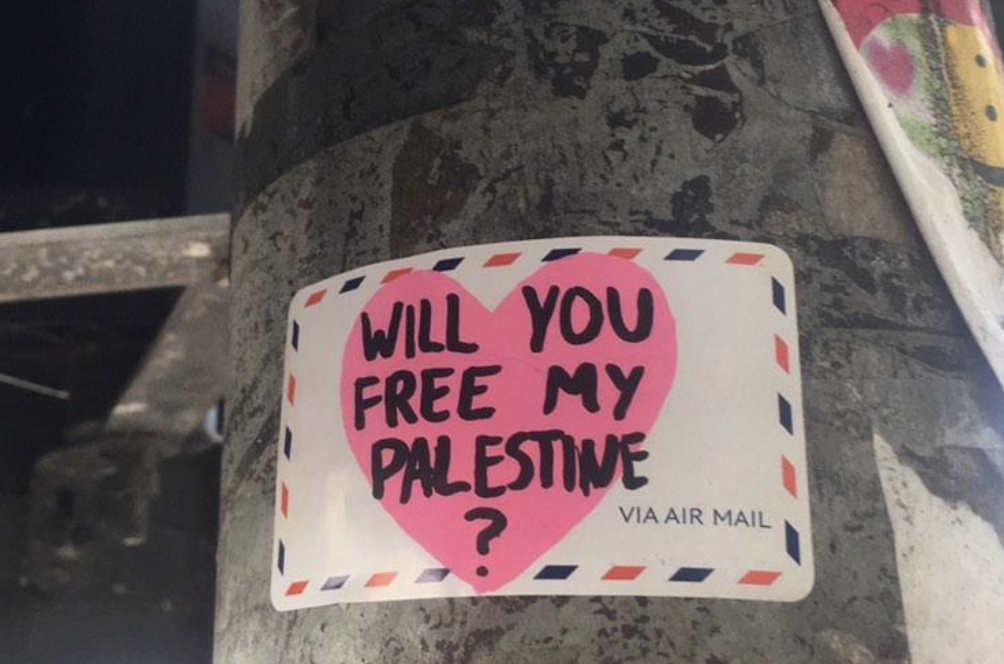
After you’ve picked up some flower, if you have some coins to spare, you might move some of those resources to the Indigenous Women’s Fund of Canada, and/or the Palestinian Feminist Collective.