Way Ahead and Right on Time
Some reflections on waiting
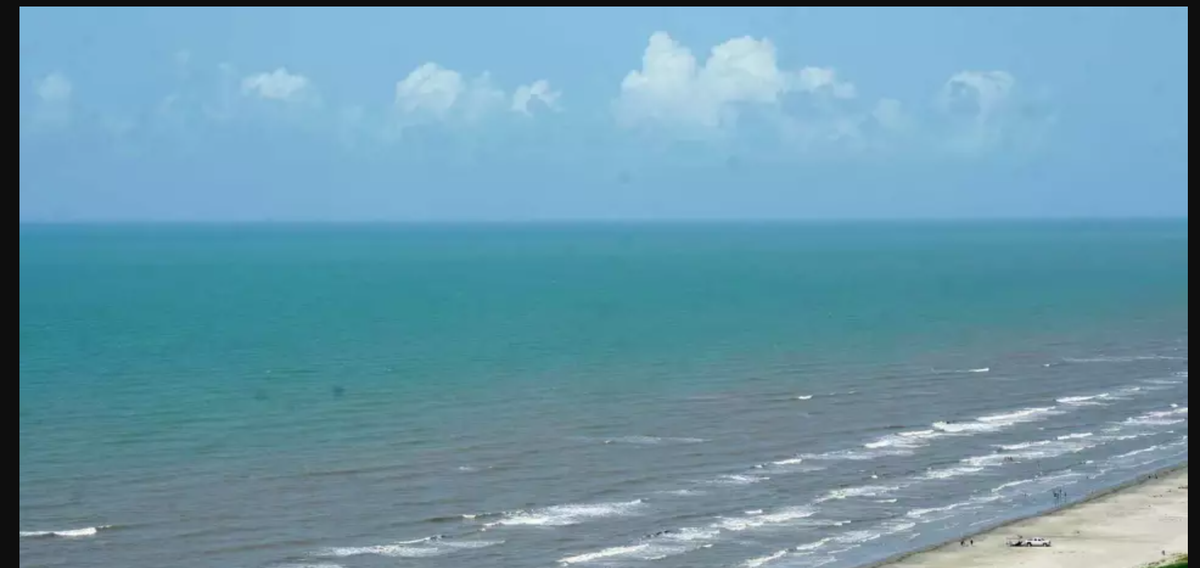
I. Am. Waiting. That’s what every moment feels like now, and it has for the last eight weeks or so that my memoir, Out to the Blue Water, has been out on submission. (Here’s an earlier [paid] post with an excerpt.) The book is about a lot of things, including growing up along the Texas Gulf Coast and my complicated relationship with my father, who on trips to Padre Island would take me out to the spot where the water turns blue. Later on, he had me locked up in a psych ward for something I’d written, for changing my name, and for being a lesbian. You can read the preface to my first book, here, which I sent him and kicked off his effort to have me locked up.
Having a book “out on submission” means that my wonderful literary agent, Katie, has the entire manuscript and is shopping it to around several editors at big publishing houses, as we wait for them to make an offer to buy it. Or, even better, for a couple of them to fight over who gets to publish it (a bidding war!). So, I am waiting. And I am feeling full of expectation, ready to explode and simultaneously not quite fully alive, suspended somewhere in an in-between fugue of nothingness.
I have been working on this memoir for a decade now, longer if you count the years when I simply thought about writing it and took no action. It was exactly ten years ago that I started the process of my DIY MFA and learning what it means to write a literary memoir. I’ve taught Sociology & Memoir a few times. Although I’ve written several sociology books and dozens of peer-reviewed articles, I agree with Maurice Carlos Ruffin, a New Orleans-based writer who made the leap from corporate attorney to writer through a similar DIY process, who says: “memoir writing is the hardest there is.”
Yes, sir. Yes, it is.
Many people think memoir writing is hard because you force yourself to relive some of your most traumatic moments, but that’s only a small part of it. I mean, you do need to do that, not simply revisit those moments but process and heal them. If you don’t, it shows up on the page as unresolved trauma porn, and nobody wants to read your journal, as Deesha Philyaw writes.
No, the real difficulty is taking a series of events that happened a long time ago and reshaping them into a narrative that is relevant to now. It is a kind of shape-shifting exercise where you, the writer, are bending the space-time continuum to give your reader an experience that feels like it is in the NOW for them, as they’re reading it. Emphasis on feels like. You are creating an experience for the reader based on some key events in your life. Believe me when I tell you, that is hard work. Frankly, I consider it a miracle that any book, much less any memoir, ever gets written and published and into the world. A miracle of collaborative human creativity.
Why write memoir?
For me, much of it has been about the creative challenge. Deep down, I’ve always wanted to be a creative writer. My training as a sociologist helped me to understand the social world and myself, but didn’t prepare me to write beautifully.
Beyond that, I wanted to take some pretty damaging things that happened to me and transmute them into art. Waiting for news on the sale of the book also means waiting to see if I succeeded at that goal.
Memoir as a form in the American context has been a key genre for exploring the interiority of race and racism. There is a direct through line from Harriet Jacobs and Frederick Douglass on to Jesmyn Ward and Kiese Laymon. I want to place my writing adjacent to this lineage by taking up Toni Morrison’s challenge in Playing in the Dark, to write about the interiority of whiteness. Further, I want my writing to embody this insight from Morrison I write on the board when I teach memoir, “It seems to me the best art is political and you ought to be able to make it unquestionably political and irrevocably beautiful at the same time." Waiting for news means wondering if I managed to pull this off, too.
Why now?
Now is when I could finish it. Now is all I’ve got.
I’ve written other books, several for academic presses and one for a trade-press and they have different time horizons. With academic press books, there is a schedule that governs when books go into production and when they are released. It’s similar to the academic calendar because the primary market is to get the books purchased by libraries and adopted by professors and, eventually, sold to college students. A long time ago (yet somehow still within my lifetime), it was possible to write a popular academic book that got picked up by large lecture classes and make bank. Those days are long gone. I do not know any professors of my generation or younger who can make a living that way.
With trade-press books, there’s a lot more pressure to get the timing right. The goal with trade-press books is to market to a general audience. Many times, this is explained as the “average reader of the New York Times,” but I’m not sure that’s still the metric. As Jeanna Kadlec explained recently, the big publishing houses are more conservative than ever and want a “sure bet” on whatever they publish (see also, Hollywood and the endless recycling of super-hero movies). The thing is, it’s all a crap-shoot and no one knows what will actually be a “hit” at any given time.
If my book sold TODAY (inshallah), it would be at least one whole year, maybe two years, before it would be on the shelf at your local bookstore. Given the state of the world and how rapidly things change, who knows what people will want to read in that time. So, everyone is guessing and part of that is about timing. Predicting whether a book will be a bestseller is about as reliable as predicting winning lottery numbers.
Pat Collins once told me that “you never want to be first” on publishing anything. I feel like I learned this with my first two academic books (e.g., White Lies, Cyber Racism), which were too far ahead of their time to make a big splash. Now, they mostly get cited as ‘early work’ and sort of dismissed as historical antecedents to more relevant contemporary work. The timing of the trade-press book (e.g., Nice White Ladies) was a mix of a little late (after the uprisings of 2020) and released in the middle of a pandemic (2021). Summoning all the optimism I’ve got, I like to think that I’m shortening the window on the timing between what I write and the zeitgeist, but who knows?
My hope, my prayer even, is that Out to the Blue Water, arrives right on time, for me and all I hope it does, and for the reader that needs it.
A Writer, At Last
No matter what happens at the end of this wait, I’ve become a writer at last. I don’t just write as part of my day job, as a sociology professor, but being a writer is how I approach the world.
One of the strangest aspects of this waiting is that I’ve felt so far away from the writing. After ten years of cobbling together time to work on this project, to now have sent it off and not be working on it just feels weird. There’s also a very strange feeling of having shared a huge, vulnerable work of art (here’s hoping) and then….radio silence. Like, did that happen? Do I exist? To cope with that particular weirdness, in the last few weeks when I’ve had friends over or gone to visit, I’ll bring a few pages from the opening of the book, and read those aloud. It’s a way of sharing the work with people I love, and for me, it is a way to stay connected to the writing while I wait.
Happily, a friend (thanks DeMisty Bellinger!) invited me to give a talk about “writing,” in June. This was my time giving a lecture that was all about writing and not just about sociology. It was so much fun (even if there weren’t many people there - colleges in summer being ghost towns). I started by reading some of the memoir aloud. You can listen to it here on the tubes.
It felt like a christening. A writer, at last.