Whiteness is Not an Ancestor
On queering ancestry & thinking beyond the nuclear family
This time of year swirls with activity - closing out the semester, getting ready for the holidays, traveling to see loved ones. It’s also a time of year that we reflect on family that has passed and what our legacy might be for the generations to follow. At the same time, as someone who identifies as queer and is happily child-free, I always squirm a little at discussions of “lineage” and “ancestors.” Is it possible to queer these ideas?
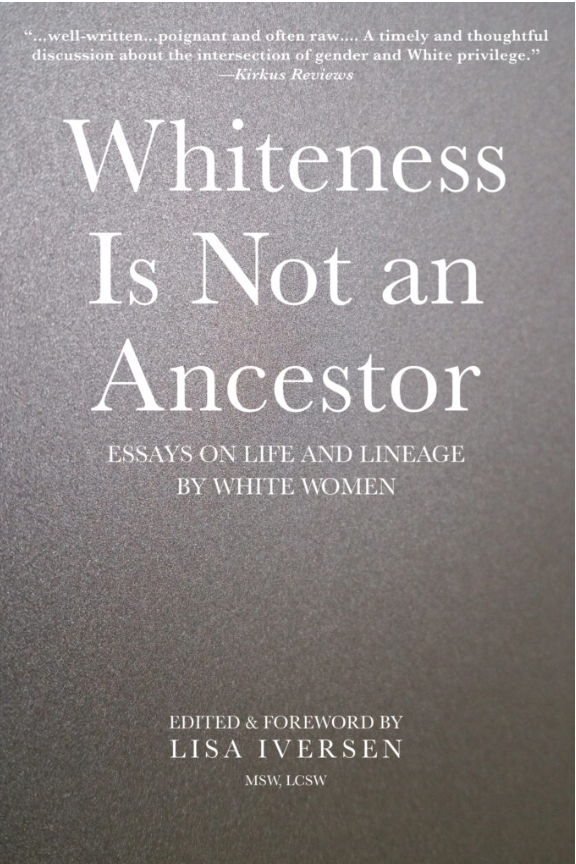
At a recent social gathering, about twenty of us went around the room to share what grounds us and gives us hope in this moment of so much chaos. Several of the African American folks spoke up to say that it is their ancestors who both ground them in the present struggle and give them hope for the future. None of us white-bodied folks shared anything like this, and I think this is because, as a book I just discovered names it, whiteness is not an ancestor.
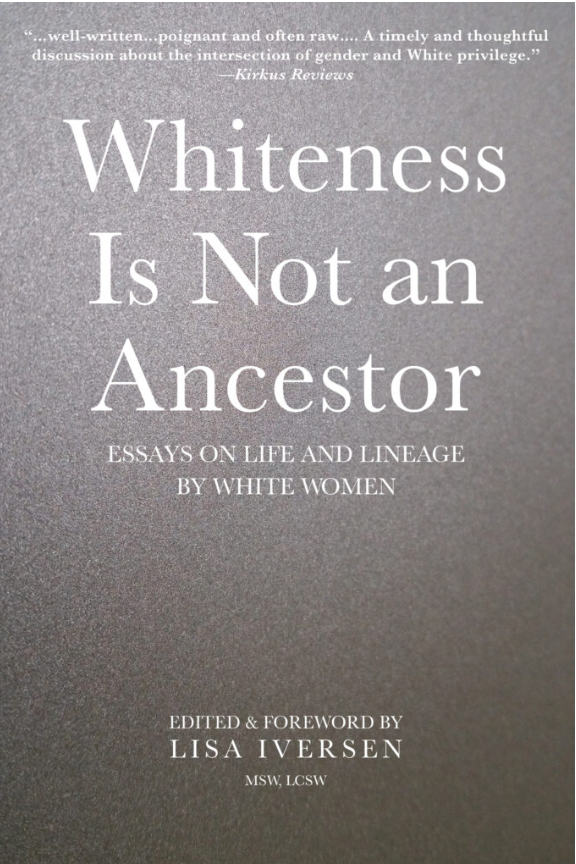
The editor of this volume, Lisa Iversen, has years of experience in family constellation therapy, and through that work came to understand that there is a residual trauma from shedding ethnicity in favor of white identity. On her website, Iversen hosts a series of conversations with the contributors to this volume. I went through and listened to all of these (obvs), and the one thing that struck me is how difficult these women found it to identify as “white.” In one of the conversations Iversen convened, she mentions that we as white women are most comfortable with seeing ourselves as either victims or rescuers. Even the women who contributed to this volume on whiteness, mostly other family therapists, they struggled with considerable discomfort at claiming that identifier, in part because it doesn’t fit within the victim/rescuer paradigm. There is a kind of shame in using a word that carries the weight of so much harm, the shame of being a perpetrator. And, it’s a reaction against this shame that provokes the far right memes like, “It’s Ok to be White.”
Going around the room at that social gathering, the one white person who mentioned their heritage was a person who claimed their Polish ancestry and, through that, a link to liberation struggles there. Reclaiming ethnicity is one way of rejecting the stultifying sameness of whiteness. But what of queerness? How do I, or any queer person, connect to ancestors?
Part of what we do well, as queer people, is create kin out of the people we love. We craft families out of friends and lovers and the lovers of our friends, and the friends of our lovers. When these loved ones pass on, they become our ancestors. Queer folks in indigenous cultures were often the healers, medicine people, and visionaries within their given community and were respected for those spiritual gifts. In some indigenous cultures, “two-spirit” people are believed to have the gift of “double vision,” being able to see both through the masculine and feminine lens. So, if we believe, as many indigenous cultures do, that queer people are the spiritually gifted ones then it makes sense that our relationship to ancestry is more layered, complex and textured than simply inheriting and passing on DNA.
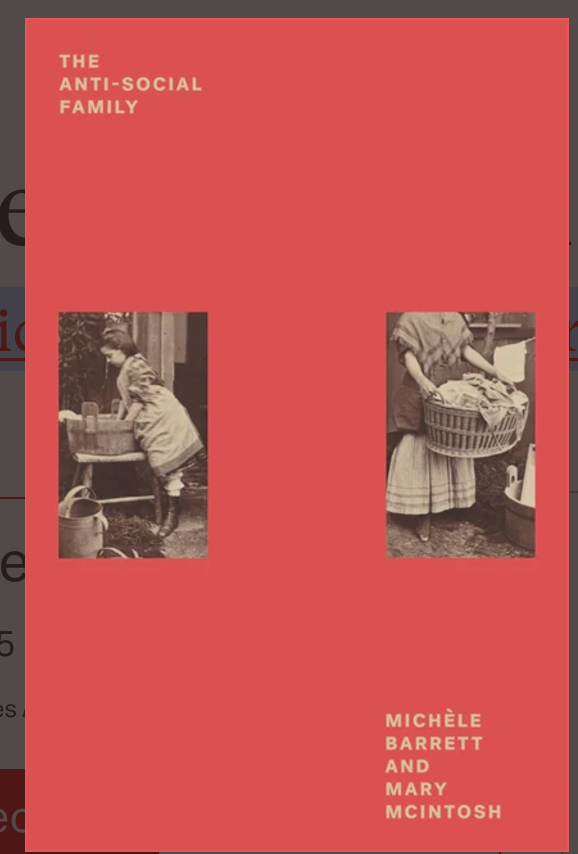
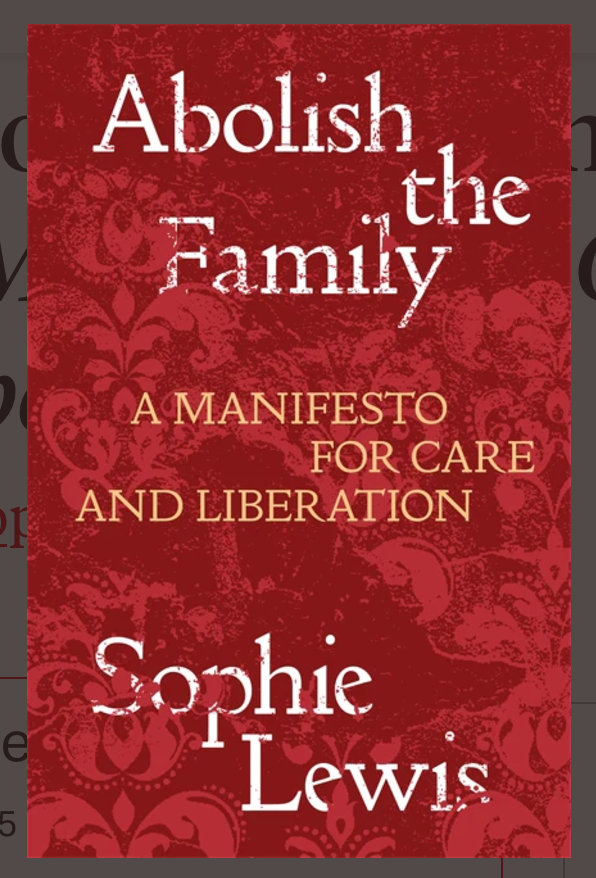
As powerful as it can be to talk of “the ancestors” and passing on our “lineage,” we should be wary of the tyranny embedded in that language. Words have power and part of what we’re invoking when we use words like “blood line,” is a notion of the nuclear family rooted in eugenics. I can say (lots) more about this in another post, but there is a long conversation within feminism about the inherently retrograde and antisocial aspects of “the family,” which keeps us narrowly focused on those closest to us biologically while distracting us from our connections and obligations to a larger collective. Michèle Barrett and Mary McIntosh write about this in The Anti-Social Family (1991/2025), and Sophie Lewis takes up a similar argument in her book, Abolish the Family (2022).
And what of the other direction, not inheritance but what I am passing on. Unlike many of my white-bodied brethren, I did not inherit generational wealth from my family. I wonder sometimes if this has also been its own kind of gift, one that has freed me from the backward-looking obligation to uphold a family mythology and from the forward-looking preoccupation with leaving a legacy.
When I do think about my legacy it is through my writing, and this quote from Toni Morrison:
"Tell us what it is to be a woman so that we may know what it is to be a man. What moves at the margin. What it is to have no home in this place. To be set adrift from the one you knew. What it is to live at the edge of towns that cannot bear your company."
For me, my writing is the place I want to leave something behind for another generation to find to decipher what it was like to live at the edge of towns that cannot bear my company. This, for me, is spiritual work. To capture in words what it means to be queer in this time and place, to see both through both a masculine and feminine lens, what moves at the margin.
***
Oh, hey, thanks for reading and while you’re here… if you have some wealth you can share, there are some queer homeless young people that could use your support. Here is the GoFundMe for MCCNY Charities. Thank you!